

.svg)
Broken Link Building: Find and Replace Dead Links for SEO
Broken Link Building: Find and Replace Dead Links for SEO
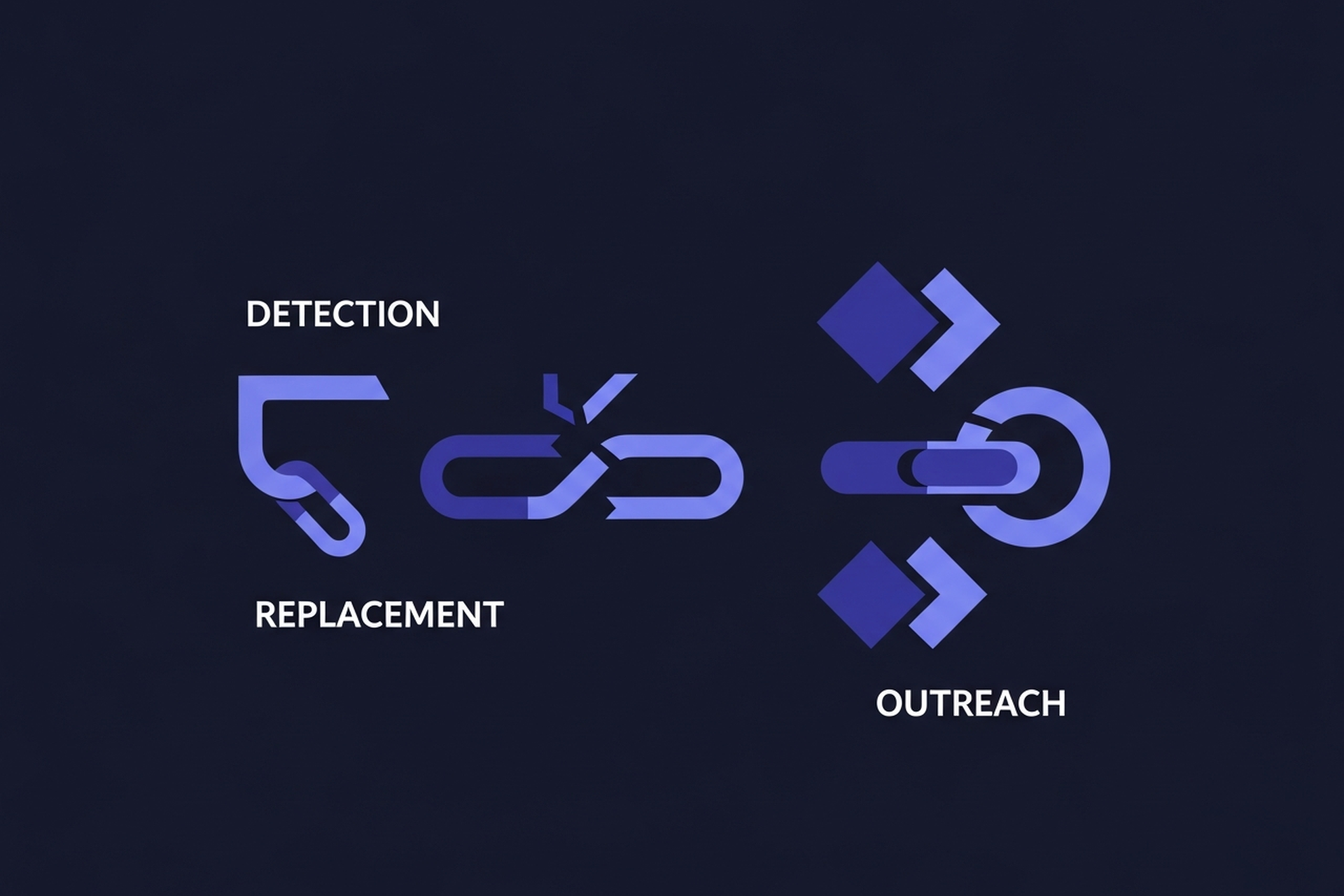
Broken link building is a link acquisition tactic built around finding dead links on authoritative websites, creating content that could replace what the dead link was pointing to, and reaching out to the site owner to suggest your replacement. The core appeal of this broken link building guide approach is that you are providing genuine value to the site owner: they have a broken link they may not know about, and you are solving their problem while creating an opportunity for a backlink.
Broken Link Building Guide: Why This Approach Works
Site owners and editors want clean, functional sites. A broken link signals to their readers that the site is not maintained, which reflects poorly on the publication. When someone points out a broken link and offers a suitable replacement, the response rate is significantly higher than cold outreach requesting a link for no specific reason.
The technique works best when the broken link was pointing to content that is genuinely relevant to your site's topic area, and when you can either create new content that serves the same purpose or identify existing content you have that is a reasonable replacement. A broken link to a deleted SEO tools comparison page is a potential match if you publish SEO tools comparison content. A broken link to a deleted recipe on a food site is not a match for an SEO content site.
Quality matters more than volume in broken link building. A hundred broken link opportunities on low-authority sites are worth far less than five on high-authority publications in your industry. Focusing prospecting time on authoritative targets produces better return on outreach effort.
The combination of genuine helpfulness and clear relevance is what separates broken link building from other outreach tactics. You are not asking someone to add a link for your benefit. You are letting them know about a problem on their site and offering a solution. This framing produces higher response rates and warmer relationships than most cold outreach approaches.
Step 1: Find Broken Links on Authority Sites
The first step is identifying pages with broken outbound links on sites that are relevant to your topic area and that would provide a quality backlink if they link to you.
Several approaches work for finding broken links at scale. Crawling specific competitor backlink profiles with a tool reveals URLs that were once link destinations and may now return 404 errors. Finding a broken link that many sites all linked to is particularly valuable because creating a replacement for that content can produce multiple outreach opportunities from a single content investment.
Resource pages and link roundup pages on authority sites are productive targets for broken link prospecting. These pages often contain curated lists of links to external resources, and over time some of those resources disappear. Crawling resource pages in your topic area for broken links surfaces outreach opportunities with context: the site owner curated that list intentionally, so they care about its quality.
Browser extensions that highlight broken links on any page you visit are a practical supplement to crawling tools. As you browse authoritative sites in your niche during normal research, a broken link checker extension flags dead links as you encounter them.
Step 2: Assess the Broken Link Opportunity
Not every broken link is worth pursuing. Before creating content or sending an outreach email, evaluate the quality of the opportunity:
Domain authority of the linking site: A link from a high-authority domain in your niche is worth significant effort. A link from a low-authority site may not justify content creation.
Topical relevance: The broken link should be on a page that is topically relevant to your content. A link from a page about SEO to your SEO content is a strong signal. A link from an unrelated topic context is worth less.
How many other sites link to the broken URL: If you find a broken URL that dozens of sites all linked to, creating a replacement opens a much larger outreach opportunity than a broken link that only one site points to. Checking the broken URL's backlink history shows its prior authority and the scale of the outreach opportunity.
Step 3: Create or Identify Replacement Content
Once you have identified a worthwhile broken link, the next step is creating content that could serve as the replacement. The content should address the same topic the dead link was covering.
If you already have content that covers the topic, evaluate whether it is strong enough to serve as a replacement. If the dead link was to a comprehensive guide and your existing content on the topic is a brief overview, the replacement will not be compelling. Either improve the existing content or create a new piece specifically designed to be the definitive resource on that topic.
When creating new content for a broken link building campaign, design it to be the best available resource on that specific topic. Replacement content that is clearly superior to what was there before is easier to pitch and more likely to attract additional links from other sites independently.
Neil Patel's link building resources cover how to identify the right content angle for broken link replacement, including how to research what the original content contained when you cannot access the deleted page directly.
Step 4: Craft the Outreach Email
The broken link building outreach email has a specific structure that works because it leads with value, not a request. The email should:
Identify yourself briefly. One sentence about who you are and your site.
Alert them to the broken link. Specify exactly which page on their site contains the broken link and which specific link is broken. Be precise: "On your [page title] page, the link to [anchor text] is returning a 404 error."
Offer your replacement. Mention that you have content covering the same topic and share the URL. Frame this as a suggestion rather than a demand.
Keep it short. The outreach email should be five to eight sentences. Longer emails reduce the likelihood of a response because they require more effort to read and respond to.
Respona's outreach strategy blog explains how to personalize broken link building outreach at scale, including how to vary the email structure to avoid pattern-matching that can result in lower deliverability over time.
Tracking and Following Up
Maintain a spreadsheet of outreach contacts, the broken links you flagged, the replacement URL you suggested, and the status of each outreach. A single follow-up sent three to five days after the initial email if you receive no response is standard. Beyond one follow-up, additional messages are unlikely to produce a response and risk damaging the relationship.
The conversion rate for broken link building outreach varies but is typically higher than cold link outreach because you are solving a real problem. A well-executed campaign targeting authoritative sites with genuinely useful replacement content commonly converts five to fifteen percent of outreach into links.
The link building strategies 2026 guide covers the full range of tactics that broken link building fits within. The digital PR link building guide explains complementary approaches that produce editorial links through different mechanisms. The internal linking strategy guide covers how to effectively distribute new external links once you earn them.
Recommended Posts





.svg)