

.svg)
Data-Driven Content: Earn Links and Authority with Original Data
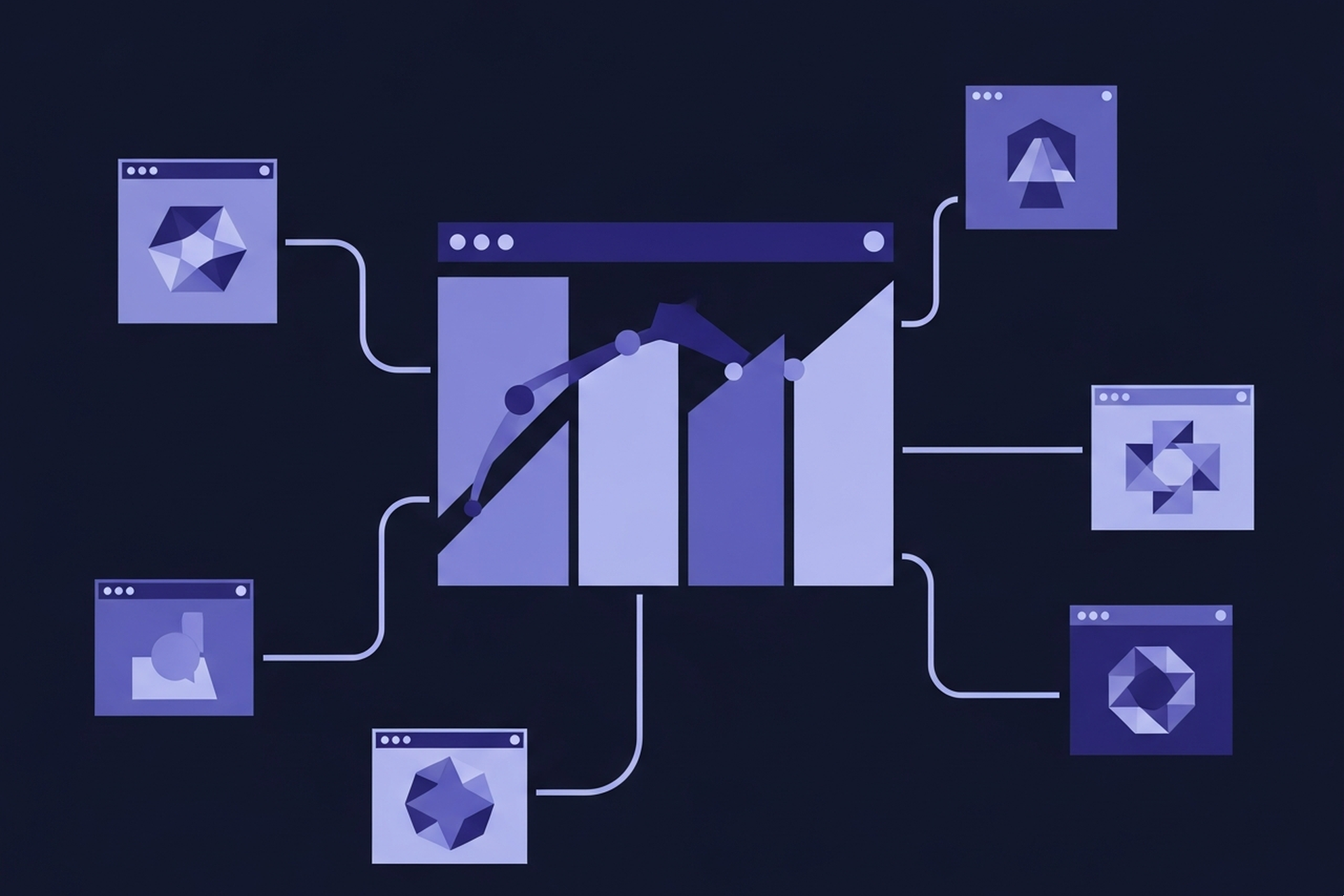
Data-driven content marketing is the practice of producing content built around original research, surveys, benchmarks, or aggregated data that no one else has published. It is one of the most effective link-building strategies available because other writers, journalists, and content teams need data to cite, and if your data is the best available on a topic, they will cite you.
The key word is original. Summarizing statistics from other sources is common and useful. But it does not earn links the same way.
When you are the primary source of a data point, every article that uses that data links back to you. One well-distributed research piece can earn dozens of high-quality backlinks passively, over months or years, because the data remains the canonical reference.
This guide covers why original data earns links, the main types of data-driven content, how to collect and present data effectively, how to distribute your research to earn media coverage, and the tools that make the process manageable.
Why Original Data Earns Links and Authority
Search engines use backlinks as a proxy for authority and trustworthiness. A site with many high-quality backlinks from relevant sources outranks sites with fewer. Creating genuinely original data gives other sites a reason to link to you that no amount of "write great content" advice can replicate.
Journalists, bloggers, and content marketers are constantly searching for statistics to support claims in their articles. Research from Orbit Media found that posts containing original research earn significantly more links than those without. When you publish a stat like "62% of B2B buyers read three to five pieces of content before contacting a vendor," you become the source that every subsequent article on that topic cites.
Topical authority compounds over time. Each time a respected publication links to your research, Google interprets that as a trust signal for your entire domain. The links from a single data-driven post lift the ranking potential of every other page on your site. That is a fundamentally different outcome from publishing a well-written article that earns no links.
There is also a competitive moat. Data you collect is data competitors cannot easily replicate.
A competitor can write a better version of your how-to post. They cannot replicate your proprietary survey of 1,000 customers, your analysis of five million data points from your platform, or your annual industry benchmark report. Original data creates content that is genuinely defensible.
Types of Data-Driven Content
Not all data-driven content requires the same resources. These are the main types, from the most accessible to the most resource-intensive.

Aggregated Public Data Analysis
You collect and analyze data that already exists in public sources: government databases, public APIs, academic datasets, or freely available industry reports. The analysis and synthesis is the original contribution.
Examples: analyzing job posting data to find which skills are growing fastest in a profession, pulling real estate transaction records to build a neighborhood price index, or aggregating social media engagement data across an industry to benchmark average performance.
This approach requires no survey panel, no proprietary data, and no budget for research tools. It requires analytical skill and time. The key is producing an insight that does not yet exist anywhere in a clear, digestible format. For help finding linkable data angles in your niche, the linkable assets guide covers research formats that tend to earn editorial attention.
Original Surveys
You design a survey, collect responses from a defined population, and publish the findings. Surveys are the most common form of original research in content marketing because they can be designed to surface exactly the insights you want and because "X% of [target audience] said Y" is highly citable.
A survey does not need to be large to be valuable. A carefully designed survey of 200 to 500 qualified respondents in a specific professional niche produces more meaningful findings than a generic survey of 2,000 random internet users. Quality of respondents matters more than sample size.
Tools like SurveyMonkey and Typeform make survey creation straightforward. For reaching specific professional audiences, Pollfish and Lucid offer paid research panels where you can specify demographic and professional criteria.
Platform or Proprietary Data
If your company has its own product or platform, you likely have access to behavioral, transactional, or performance data that no one else can access. Publishing anonymized, aggregated insights from this data is one of the highest-credibility forms of original research.
Examples: Mailchimp publishing average email open rates by industry, Semrush publishing keyword difficulty benchmarks, Ahrefs publishing content decay data from their crawl index. Each of these draws directly from proprietary platform data and becomes the canonical reference for that benchmark in their industry.
Platform data reports are the single most defensible form of original research because no competitor can replicate your data set. If you have platform data available, this is where to focus your data-driven content investment.
Benchmark Reports
Benchmark reports synthesize data across multiple sources, often combining survey data with platform or public data, to produce reference points that professionals use to evaluate their own performance.
A benchmark report answers questions like: "How many blog posts does a company our size publish per month?" or "What is a typical organic conversion rate for B2B SaaS?" These questions come up constantly in planning conversations, and whoever publishes the definitive benchmark becomes the cited authority.
Annual benchmark reports with consistent methodology are particularly valuable because they earn new citations every year as the data is updated, and because they create a natural content refresh cycle that keeps the asset current.
How to Collect Data Effectively
The quality of your research depends on the quality of your methodology. Sloppy data collection produces findings that journalists and careful readers will question, which limits how widely the research is cited.
Define your research question before collecting data. What specific question does this research answer? A clear research question guides survey design, determines what data to collect, and makes the eventual findings easier to communicate. "State of [Industry] 2026" is not a research question. "How are [industry professionals] allocating their budget between [activity A] and [activity B] in 2026, and how has this changed from 2025?" is.
Sample carefully. For surveys, define your target population explicitly and screen respondents. A survey titled "How B2B Marketers Use LinkedIn" should only include B2B marketers who actively use LinkedIn, not anyone who clicked a general interest link. Screening questions add friction but produce data worth citing.
Use consistent answer scales. If you are comparing data year over year, the answer choices must be identical. Changing the scale (e.g., from 1-5 to 1-10, or from percentage buckets to single percentages) makes longitudinal comparison impossible.
Report methodology prominently. Your research page should describe who was surveyed, how many respondents, when the survey was conducted, and how respondents were recruited. Journalists and researchers need this information to evaluate whether to cite your findings. Hiding methodology creates doubt.
How to Present Data for Maximum Impact
Raw data does not earn links. Findings presented clearly, with context and takeaways, earn links.
Structure your data-driven content this way:
- The headline finding. One compelling number or comparison that captures the most important insight. This is what journalists pull for their articles.
- Context and explanation. Why does this finding matter? What does it tell us about the industry, behavior, or trend?
- Supporting data. Secondary findings that add depth and nuance.
- Methodology note. Brief description of how the data was collected.
Visualize the key findings. Charts, graphs, and infographics make data easier to understand and more shareable. For clean, embeddable data visualizations without design skills, Datawrapper is the best free option available. Canva and Flourish are good alternatives depending on the chart type.
Create embeddable versions of key charts. When other sites want to use your visual, make it easy for them to embed it with attribution. The embed code automatically links back to your original research page. This is a link-building mechanism built directly into the content format.
How to Distribute Data-Driven Content to Earn Coverage
Publishing original research on your site is necessary but not sufficient. Active distribution is what converts good research into backlinks and press coverage.
Reach out to journalists before publishing. If you know you are publishing a benchmark report on B2B marketing budget allocation, identify five to ten journalists who cover that beat. Share an embargo copy and offer exclusive early access to the data. A journalist who gets the story first is far more likely to cover it than one who discovers it in their RSS feed.
Submit to industry newsletters and roundups. Most industries have newsletters that curate research and data for their readers. An email to a curator saying "we just published a survey of 400 [industry professionals] on [topic], thought it might be useful for your readers" often produces inclusion if the research is genuinely interesting.
Promote through LinkedIn and industry communities. Data posts perform exceptionally well on LinkedIn, particularly in professional niches where the audience cares about benchmarks and industry trends. Share the headline finding with a visual and a link to the full report.
Create multiple content assets from the same data. A single survey can produce a long-form report, a series of individual stat posts, a slide deck, an infographic, and several social posts. Repurposing the data maximizes distribution with minimal additional work. The content repurposing strategy guide covers exactly how to build this kind of asset cascade.
Pitch to journalists for follow-up coverage. Once the initial research is published and circulating, set up Google Alerts for your key statistics. When a journalist cites your data in an article without linking, reach out politely to let them know the source. Many will add the link.
Tools for Data-Driven Content Creation
| Tool | Purpose |
|---|---|
| SurveyMonkey | Survey creation and distribution |
| Typeform | Conversational surveys with better UX |
| Pollfish | Paid research panels for targeted respondents |
| Datawrapper | Clean embeddable data visualizations |
| Flourish | Interactive data storytelling and charts |
| Google Sheets + Looker Studio | Data analysis and dashboard creation |
| Ahrefs | Track backlinks to your research posts |
| BuzzSumo | Identify journalists who cover data in your niche |
Measuring the Impact of Data-Driven Content
Track these metrics to evaluate whether your data-driven content investment is working:
- Referring domains earned (measured via Ahrefs or Semrush): the primary KPI
- Media mentions (measured via Google Alerts and BuzzSumo): indicates press coverage separate from direct links
- Organic traffic to the research page over time
- Domain rating or Domain Authority trend as links accumulate
Give data-driven content at least six months to build its link profile. Some research pieces earn most of their links in the first two weeks of launch. Others earn links steadily for years as the data gets discovered and cited. Annual benchmark reports especially show compounding link value over time.
For teams building an organic growth strategy where links and authority matter, data-driven content is one of the few content formats that generates both direct traffic and durable ranking improvements across the entire site. It takes more planning than a standard blog post, but the return per piece is substantially higher.
Recommended Posts





.svg)