

.svg)
Blog Conversion Optimization: How to Turn Readers Into Leads (Not Just Traffic)
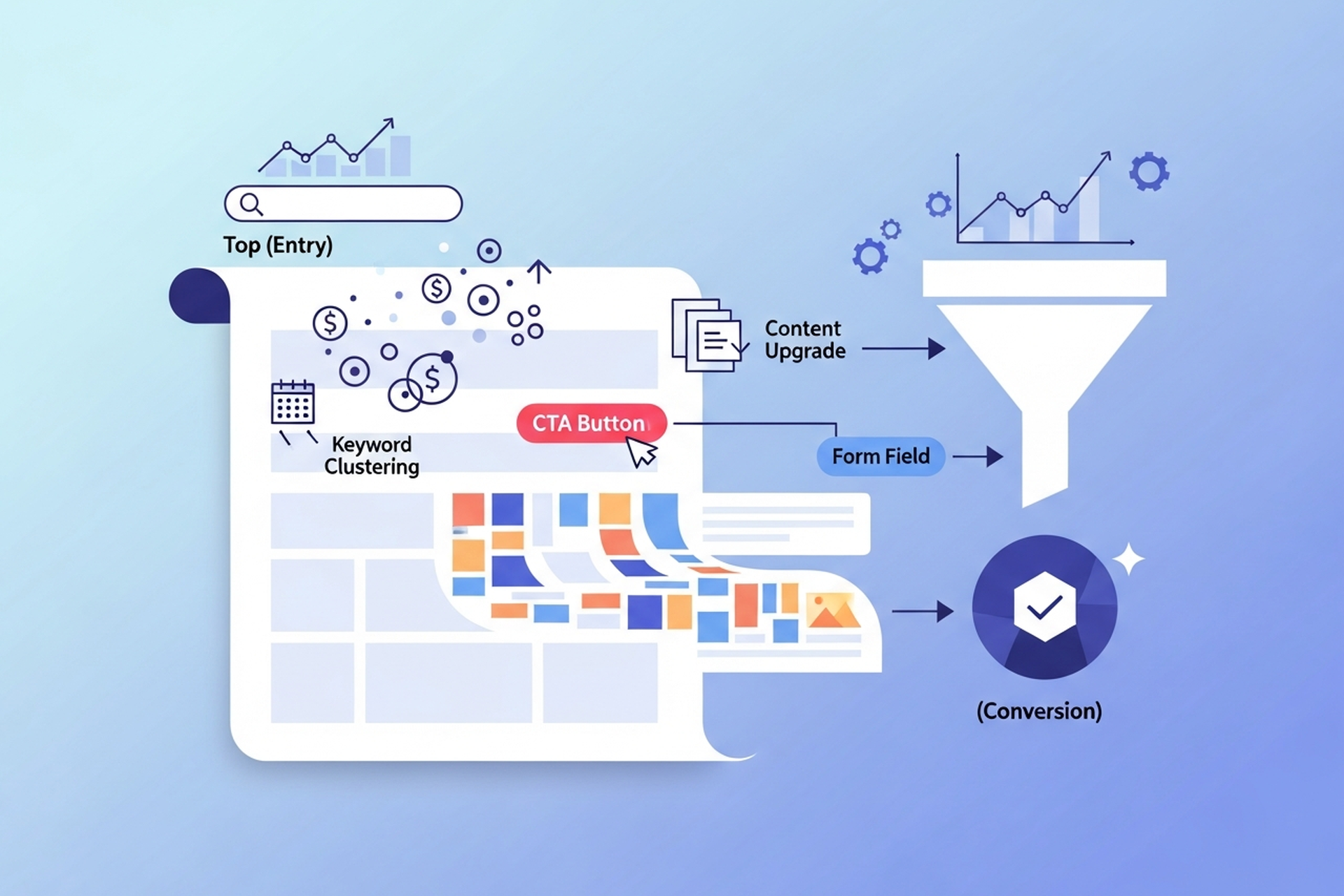
Most marketing teams treat their blog as a traffic asset. They track sessions, monitor keyword rankings, and celebrate when a post cracks the first page of Google. What they rarely track is what happens after someone arrives. Blog conversion optimization is the practice of closing that gap: turning readers who found you through search into leads, subscribers, or customers.
This guide covers the specific tactics that make the difference, from CTA placement to content upgrades to exit intent. These are not generic conversion principles ported from landing page theory. They are approaches built specifically for how blog readers behave.
Why Blog CRO Is Different from Landing Page CRO
A landing page exists for one reason: to convert. A blog post exists to educate, inform, and build trust. That difference matters a great deal when you start thinking about conversion.
Visitors land on blog posts in a different mental state than visitors who click a paid ad. They are in research mode, not buying mode. They scrolled past a headline that promised to answer a question, and they are here to get that answer. If your CTA interrupts that process too aggressively, they will bounce. If you never ask for anything, they will read, learn, and leave.
The goal of blog conversion optimization is to convert without disrupting. That requires placing the right ask at the right moment, aligned to where the reader is in their thinking.
The Conversion Funnel Inside a Single Blog Post
Think of each blog post as having its own mini-funnel. The reader enters at the top (the headline and intro), moves through the middle (the body content where trust builds), and reaches the bottom (the conclusion and final CTA). Conversion rates typically rise the further down the page a reader goes, because deeper engagement signals higher intent.
This means that the most important real estate for conversion is not the sidebar or the top of the post. It is the end of each major section, and especially the post conclusion. A reader who made it to your closing paragraph has already decided you are worth their time.
Inline CTAs: Placement and Framing
An inline CTA is a call to action embedded inside the post content, rather than in the sidebar or header. Research on how readers interact with long-form content consistently shows that inline elements get more attention than peripheral ones. Sidebars are often ignored entirely.
Effective inline CTAs follow a few specific rules. First, they appear after a section that has already delivered value, not before. Second, they connect the CTA ask to the topic just covered, so the transition feels natural rather than interruptive. Third, they are short: two sentences at most, with a single clear action.
A post about keyword research, for example, might end a section on search intent with: "Once you understand intent, the next step is grouping keywords into clusters. See how that process works in our guide to building an organic traffic generation system." The link adds value; it does not feel like an ad.
Avoid placing inline CTAs in the first third of a post. Readers who have just arrived have not yet decided whether you are worth their time. An early pitch signals that you care more about conversion than about helping them.
Content Upgrades: The Highest-Converting Blog CRO Tactic
A content upgrade is a piece of downloadable content that is directly relevant to the blog post a reader is already consuming. It extends the value of the post rather than offering something generic. The conversion rate on content upgrades consistently outperforms generic lead magnets because the offer has already been validated by the reader's own behavior: they read 600 words about a topic, which means they want to go deeper.
Common content upgrade formats include checklists, templates, calculators, extended guides, and data exports. The key is that the upgrade is specific to the post, not repurposed from an unrelated offer. A post about optimizing for search intent should offer a search intent classification worksheet, not a generic SEO checklist.
Placing the content upgrade offer mid-post, after the reader has engaged with substantive content, tends to outperform both above-the-fold and end-of-post placement. You want to catch readers while their interest is peaked, before it has time to taper.
Exit Intent: A Second Chance at Conversion
Exit intent tools detect when a visitor's cursor moves toward the browser's close button or address bar and trigger a modal or overlay in that moment. Done poorly, this is an annoying popup. Done well, it is a genuinely useful second offer that catches readers who are about to leave without converting.
The most common mistake with exit intent on blog posts is showing the same generic newsletter signup that appears everywhere else on the site. If a reader spent four minutes with your post about measuring content performance and is about to leave, a generic "Subscribe to our newsletter" prompt is weak. A prompt that says "Before you go: download the content performance dashboard template" is specific, timely, and contextually relevant.
Exit intent works best when the offer is tied to the specific post triggering it. That requires some operational overhead (different offers per post or per topic cluster), but the lift in conversions usually justifies it.
Matching CTA Type to Funnel Stage
Not every blog post should push for the same conversion. A top-of-funnel post explaining what keyword clustering is should not ask for a demo. A middle-of-funnel post comparing approaches to content strategy might reasonably offer a detailed guide or checklist. A bottom-of-funnel post comparing tools is the right place to introduce a trial or product-specific CTA.
Mismatched CTAs are one of the most common reasons blog conversion rates stay low. The reader is at a certain stage of their research, and the ask is optimized for a different stage entirely. Understanding where a post sits in the funnel is the prerequisite to choosing the right conversion goal.
If you are thinking about blog CRO alongside your broader content strategy, this is also where topic clusters become relevant. Tools like ClusterMagic map your content by keyword cluster and funnel stage, which makes it easier to see which posts are missing CTAs, which ones have mismatched offers, and where you have conversion gaps across the cluster.
On-Page Elements That Support Conversion
Beyond CTAs and content upgrades, several on-page elements influence whether a reader converts. A post with a clear structure, logical heading hierarchy, and well-placed visual breaks signals editorial quality. Readers trust posts that are easy to navigate. Trust is a precondition for conversion.
Short paragraphs keep readers moving through the post. Long walls of text trigger the impulse to skim, and skimmers rarely convert. A 4–5 sentence paragraph ceiling is a good working rule. Pull quotes and bold summaries at section transitions help readers who scan to find their footing before reading in depth.
Internal links also play a conversion role that is often underappreciated. A reader who clicks to a second post is demonstrating a second signal of interest. That extended session is more likely to convert than a single-post visit. Building deliberate internal linking paths, as outlined in the on-page content optimization checklist, is both an SEO and a CRO practice.
Measuring Blog Conversion Performance
You cannot optimize what you are not measuring. For blog CRO, the baseline metrics are conversion rate by post (clicks on CTAs divided by post sessions), scroll depth (a proxy for engagement), and time on page. Together, these tell you which posts are engaging readers and which are converting them.
Scroll depth data is particularly useful for diagnosing underperforming posts. If a post has strong organic traffic but low conversion, scroll depth tells you whether readers are leaving before they even reach your CTAs. That is a different problem than readers who scroll through and still do not convert, and it calls for a different fix.
Understanding what your content performance data is telling you is the starting point for any systematic CRO effort. Without that baseline, optimization is guesswork.
Bringing It Together
Blog conversion optimization is not a single tactic. It is a set of decisions: where to place CTAs, what to offer as a content upgrade, how to design exit intent, and how to match conversion goals to funnel stage. Each decision is informed by how your specific readers behave on your specific content.
The baseline principle underneath all of it is respect for the reader's intent. They came to learn something. Give them that first, completely and generously. Then, from a position of earned trust, make an ask that is relevant to what they just read. That sequence is what separates blog CRO that works from interruptions that drive bounce rates up.
Recommended Posts





.svg)