

.svg)
Build an Organic Traffic Generation System That Compounds | ClusterMagic
Most organic traffic efforts produce a spike and then a plateau. A new blog post ranks, drives traffic for a few weeks, and then decays. The team publishes another post, repeats the cycle, and wonders why growth is flat. The problem is not the content. The problem is that individual posts do not create systems. An organic traffic generation system compounds because each new piece of content makes every existing piece stronger. For a focused guide on the specific mechanisms that turn organic traffic into self-reinforcing momentum — including content cluster sequencing and the compounding curve timeline — see how organic traffic growth compounds over time.
The sites experiencing consistent organic growth in 2026 are treating organic traffic as an interconnected system, not a collection of independent pages. Search Engine Land's analysis of organic search success criteria confirms that revenue, not rankings, should drive the strategy. Rankings are an input. Revenue is the output. The system connects them.
The Three Pillars of an Organic Traffic Generation System
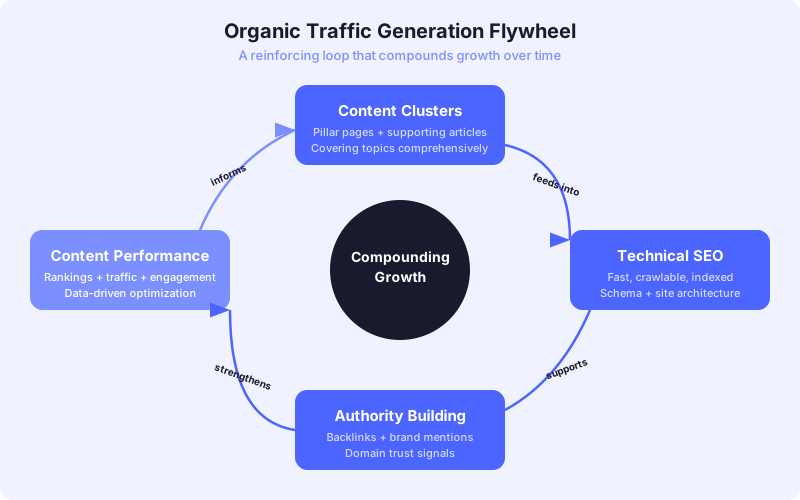
An organic traffic generation system runs on three pillars that reinforce each other. Removing any one of them creates a bottleneck.
Pillar 1: Content architecture. This is the structural layer. Content organized into topic clusters creates compound authority that individual posts cannot achieve. Each cluster has a pillar page covering a broad topic and supporting pages targeting specific subtopics. The internal linking between them distributes authority and signals topical depth to search engines.
Pillar 2: Technical foundation. Fast load times, mobile-first rendering, clean crawl paths, and proper indexing ensure that Google can discover, render, and rank your content. Technical debt caps organic performance regardless of content quality.
Pillar 3: Authority building. External links, brand mentions, and E-E-A-T signals tell Google your content is trustworthy. Pages in position one have an average of 220 backlinks and 3.8x more backlinks than positions two through ten. Authority is the multiplier that determines how high your content can rank.
Building the Content Architecture Layer
Content architecture is the highest-leverage investment in your organic traffic generation system because it creates compound returns.
Start with topic mapping. Identify the 5-10 broad topics your business needs to own in search. These become your pillar topics. Each pillar should represent a topic with meaningful search volume and direct relevance to your product or service.
Build clusters around each pillar. For each pillar topic, identify 10-20 subtopics that your audience searches for. Each subtopic becomes a supporting page. Use keyword mapping to assign a primary keyword to every page and prevent cannibalization.
Connect everything through internal links. Every supporting page links back to its pillar. The pillar links out to every supporting page. Supporting pages cross-link to related pages within the same cluster. This bidirectional structure creates the authority loops that make internal linking effective.
Fill gaps systematically. Run a content gap analysis against your top three competitors for each topic cluster. Identify subtopics they cover that you do not. Each gap is a missing spoke in your cluster. Filling it strengthens the entire wheel.
The compound effect works like this: when you add a new supporting page to a cluster, it links to the pillar and receives links from existing cluster pages. The new page benefits from existing authority. The existing pages benefit from a more complete cluster. Every addition makes the whole system stronger.
Establishing the Technical Foundation
Technical SEO is not glamorous, but it removes the ceiling on organic performance.
Site speed. Video content earns a 41% higher click-through rate and search results with video drive 157% more organic traffic. But this only works if your pages load fast. Target under 2.5 seconds for Largest Contentful Paint across all pages. Implement lazy loading, image compression, and CDN delivery.
Crawl efficiency. Submit a clean XML sitemap. Block utility pages and thin content from crawling via robots.txt. Fix redirect chains and broken links. Google's crawl budget documentation explains how wasted crawl resources delay indexing of valuable content.
Mobile-first indexing. With 62.7% of traffic on mobile, Google's mobile-first index means your mobile experience determines your rankings. Test every template across device sizes. Fix viewport, font size, and tap target issues.
Structured data. Implement relevant schema markup (Article, FAQ, HowTo, Product) on every eligible page. Rich results earn 58% click-through rates compared to 41% for standard results.
Building Authority That Compounds
Authority building is the external validation layer. Without it, even well-structured, technically sound content hits a ranking ceiling.
Digital PR and original research. 48.6% of SEOs rate digital PR as the most effective link-building tactic for 2026. Publish original data, industry surveys, or benchmark reports that journalists and industry sites cite. One successful digital PR campaign produces more authoritative links than months of manual outreach.
E-E-A-T optimization. Google's Experience, Expertise, Authoritativeness, and Trustworthiness signals are increasingly weighted in ranking calculations. Add author bios with credentials. Cite sources. Include original perspectives based on real experience. Topical authority compounds when your content consistently demonstrates depth across a topic area.
Strategic guest contributions. Write for publications your audience reads. Focus on demonstrating expertise rather than acquiring links. The authority transfer is real, but the brand visibility is equally valuable for long-term organic growth.
Adapting for Multi-Platform Visibility
Organic traffic generation in 2026 extends beyond Google search results.
AI search platforms. ChatGPT, Claude, Perplexity, and other AI assistants are a growing referral channel. Structure content with clear headings, direct answers, and cited data points. AI systems prefer content that is well-organized, factual, and verifiable.
AI Overviews. Google's AI Overviews trigger for approximately 18.57% of commercial queries. Getting cited requires structured, authoritative content that directly answers the query. Pages with clear question-and-answer formatting and specific data points get selected more often.
Voice search. Concise, direct answers formatted as FAQ content perform well for voice queries. Positions one through three capture the vast majority of voice search responses.
Measuring System Performance
An organic traffic generation system requires system-level metrics, not just page-level tracking.
Cluster-level traffic. Track organic traffic at the cluster level, not just by individual page. If a cluster's total traffic is growing even while individual pages fluctuate, the system is working.
Indexing rate. Monitor what percentage of published pages Google indexes within 30 days. A healthy system indexes 90%+ of new pages within two weeks. Lower rates indicate technical or quality issues.
Revenue attribution. Connect organic traffic to pipeline and revenue through your CRM. The system's value is measured in business outcomes, not traffic volume.
For detailed guidance on tracking organic growth, see our organic traffic growth guide.
ClusterMagic builds the content cluster architecture that turns individual SEO efforts into a compounding organic traffic system.
Book a strategy session to design your organic traffic generation system.
Written by Deanna S.
Recommended Posts




.svg)