

.svg)
Internal Linking Strategy: How to Build One That Scales | ClusterMagic
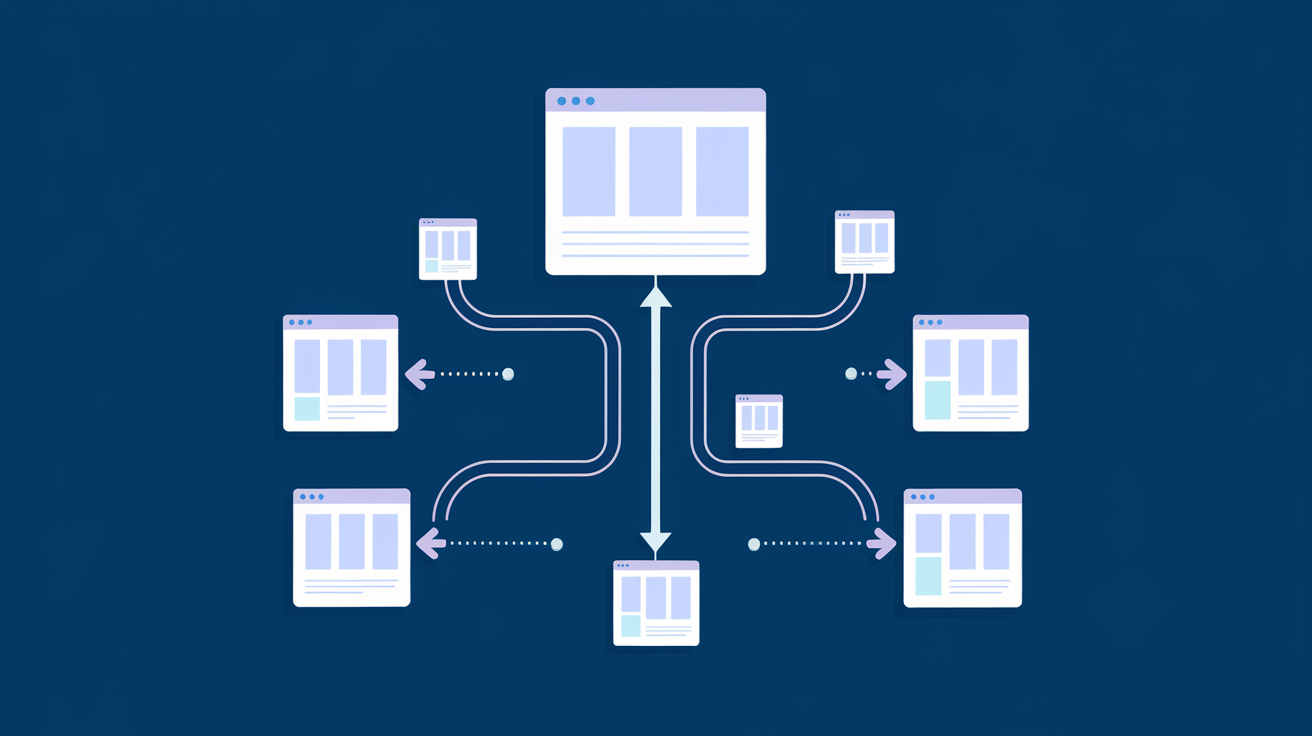
Your internal linking strategy is probably broken. Not because your team doesn't care, but because most teams treat internal links as an afterthought added at publish time. That approach misses the point entirely. Internal linking is not a publish-time checklist. It's the operating system your content runs on, and it only works when your cluster architecture comes first.
An InLinks study of 5,112 websites found that 82% of internal linking opportunities go untapped. That's not a minor gap. That's most of the potential value of a content library sitting unused because no system exists to capture it.
Why Internal Linking Still Moves the Needle
Before getting into the how, it's worth being direct about why this matters. Google's PageRank algorithm, confirmed through the March 2024 API leak, still uses multiple PageRank variants in active ranking calculations. Internal links are a direct mechanism for distributing that authority across your site.
The practical impact is measurable. A SearchPilot A/B test on a large publisher site showed a 7% uplift in organic traffic from targeted internal link additions alone. No new content, no backlinks acquired. Just smarter linking of existing pages.
There's also a crawling dimension that often gets underestimated, and the technical SEO for content teams guide covers how crawl depth and site architecture interact with content visibility. Pages within three clicks of your homepage receive priority crawling and faster indexation. If your supporting content is buried five or six clicks deep, you're slowing down the rate at which Google recognizes and indexes new material.
Internal linking, done strategically, solves both problems at once. It distributes authority and it shapes how crawlers navigate your site.
The Real Problem: Most Teams Link Without a Map
Ask any content team how they handle internal links and you'll hear some version of "we link to related posts when we think of them." That instinct is fine. The execution almost always falls apart because there's no underlying map.
Without a map, linking decisions are random. One writer adds three links, another adds none. A cornerstone pillar page gets linked from two supporting posts when it should be linked from twenty. Orphaned pages accumulate quietly in the background, generating no internal equity and receiving no crawl priority.
The root cause is that linking decisions are being made before content relationships are defined. You can't build a road network if you haven't mapped the cities first. Content clusters are the map. Internal links are the roads.
This is why building content clusters and pillar pages is a prerequisite to any internal linking work, not a parallel track. Research from HubSpot's own pillar-cluster implementation consistently shows that topic clusters generate roughly 30% more organic traffic and sustain rankings approximately 2.5 times longer than standalone posts. The cluster structure creates the conditions under which internal linking can do its job.
Map Your Clusters Before You Place a Single Link
The cluster-first approach flips the usual workflow. Instead of linking reactively as you publish, you define the architecture in advance and link according to that structure.
Here's what that looks like in practice:
Step 1: Define your pillar topics. These are the broad subjects your brand needs to own. Each pillar becomes a hub page that covers the topic comprehensively at a high level.
Step 2: Map your supporting content. Each piece of supporting content targets a specific subtopic within the pillar's scope. Understanding topical authority in SEO helps here. Authority accumulates at the topic level when supporting content reinforces the hub consistently.
Step 3: Assign keywords before you link. This is a step most teams skip. Before deciding which pages should link to which, every page needs a clearly assigned primary keyword. Keyword mapping gives each page a defined role in your architecture. Without it, you're guessing which pages should reinforce each other.
Once the map exists, linking decisions become obvious rather than arbitrary.
The Hub-and-Spoke Model in Practice
The hub-and-spoke model is the practical expression of cluster architecture. Your pillar page is the hub. Supporting posts are the spokes. Every spoke links back to the hub. The hub links out to each spoke. That bidirectional structure creates a closed loop of authority that's far more durable than one-directional linking.
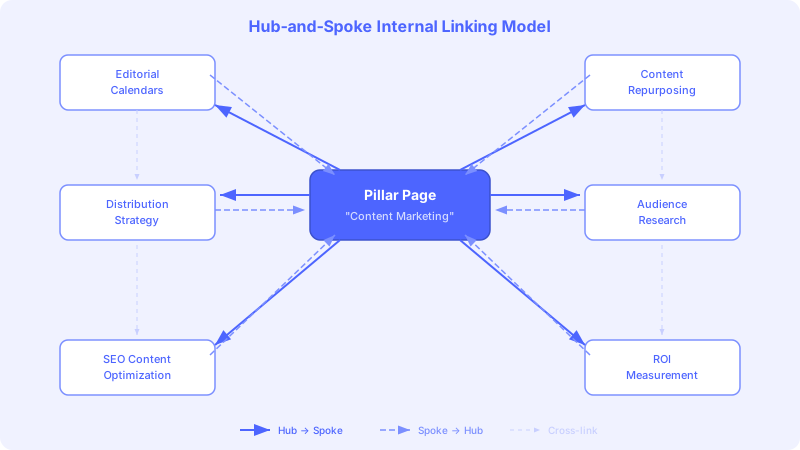
What this looks like at scale:
- A pillar on "content marketing" links out to supporting posts on editorial calendars, content repurposing, distribution strategy, and audience research.
- Each of those supporting posts links back to the pillar page using contextually relevant anchor text.
- Supporting posts also cross-link to each other where the topics genuinely connect.
The cross-linking between spokes is where most teams miss opportunities. Two supporting posts covering adjacent subtopics within the same cluster should reference each other. That reinforces the topical relationship for both users and crawlers.
One important caveat: the structure should reflect genuine topical relationships, not forced connections. A link from a post on "email marketing metrics" to a post on "video production tips" doesn't help your topic clusters unless there's a clear, relevant reason for a reader to move between those two topics.
Anchor Text Strategy at Scale
Anchor text is the signal Google uses to understand what a linked page is about. Random or generic anchor text ("click here," "read more," "this post") wastes that signal entirely.
Use descriptive, keyword-relevant anchor text that matches the target page's primary topic. The on-page content optimization checklist includes anchor text as one of the key elements to review before publishing. If you're linking to a page targeting "internal link building," the anchor text should reflect that topic naturally in context. It doesn't need to be an exact keyword match. It needs to be descriptive and relevant.
At scale, anchor text consistency compounds. When twenty pieces of supporting content all link to a pillar page using variations of the same core topic phrase, that signal reinforces the pillar's authority on that subject. Inconsistent anchors dilute that effect.
A few practical rules:
- Vary the anchor text naturally across pages. Exact repetition across dozens of posts looks unnatural.
- Avoid over-optimizing with exact-match keyword anchors on every single instance.
- Make sure the link makes sense for the reader, not just for the algorithm. Contextual relevance improves both user experience and SEO value.
Internal Linking Strategy Gaps: How to Find and Fix Them
Even well-structured sites accumulate gaps. Pages get published without links in. Older content misses connections to newer posts. Pillar pages never get updated to reflect new supporting content.
Orphaned pages are the most severe version of this problem. An orphaned page has no internal links pointing to it. It receives no internal equity, may be crawled infrequently, and is essentially invisible to users navigating by links. These pages are common and often invisible until you specifically audit for them.
To find gaps systematically, start with a content gap analysis that maps your existing content against your cluster structure. You're looking for two things: pages that receive too few internal links given their importance, and pages that don't link out when they should.
A few areas to audit:
High-value pages with few inbound links. Your most important pages should have the most internal links pointing to them. If a pillar page only receives links from two or three posts, that's a gap.
Recently published posts with no links from older content. New pages need internal links to get crawled and indexed efficiently. Going back to update older, relevant posts is a high-leverage activity.
Cluster hubs that are missing spokes. If your cluster map calls for ten supporting posts on a topic and only six exist, those are content creation priorities, not just linking gaps.
Link gap work isn't glamorous, but it's where a large portion of that 82% of missed opportunity lives.
Measuring Whether Your Internal Linking Is Working
A strategy without measurement is guesswork. Internal linking is measurable, though the metrics require some thought.
Organic traffic changes at the page and cluster level are the most direct signal. If you add targeted internal links to a group of pages and organic traffic to those pages grows over the following weeks, that's directional evidence the linking work contributed.
Track crawl coverage using Google Search Console's coverage report. Improving internal link depth to important pages should show up as faster indexation for those pages over time.
Monitor your click depth distribution. Tools like Sitebulb or Screaming Frog can show how many clicks away your pages sit from the homepage. Reducing the average click depth for important content is a measurable outcome.
Watch for orphaned page counts over time. This number should decrease as your linking system matures. If it keeps growing, your publishing workflow doesn't have a linking step built in.
Internal Linking as a Team System, Not a Solo Task
The difference between an internal linking checklist and an internal linking strategy is whether it operates as a team system. Checklists are forgotten. Systems run by default.
That means the cluster architecture needs to live somewhere your whole content team can reference. Linking decisions need to happen during content planning, not at publish time. Audits need to be scheduled, not ad hoc.
When ClusterMagic maps your content clusters, it gives your team a shared architecture to link against. Every piece of content has a defined place in the cluster. Every linking decision has context. If you want to see how that works for your content library, you can book a walkthrough here.
Bringing It Together
A strong internal linking strategy starts with a content map, not a publish-time habit. Build your cluster architecture first. Assign keywords to every page before making linking decisions. Connect spokes to hubs bidirectionally. Use descriptive anchor text consistently. Audit for gaps regularly and fix orphaned pages as you find them.
The pages that rank and hold rankings are almost never isolated. They sit inside well-linked clusters where internal equity flows intentionally. That's not an accident. It's a system that someone built on purpose.
Build the system first. The links will follow naturally.
Recommended Posts





.svg)