

.svg)
B2B Content Distribution Channels: Where to Share for Reach

Most B2B teams put 80% of their budget into creating content and maybe 20% into getting it in front of people. That ratio is backwards. A great post that nobody reads has zero pipeline impact, and the bar for "nobody reads it" is higher than most marketers want to admit. Smart b2b content distribution is what turns a good article into a deal.
This guide walks through the distribution channels that actually work for B2B, how to decide which ones to invest in, and how to build a repeatable system so you're not reinventing the wheel every time you publish.
Why distribution matters more than production
Publishing is easy now. Ranking, being seen, and being remembered is hard. LinkedIn's B2B research consistently shows that buyers remember brands they encounter repeatedly across channels, not the ones that publish the most content in one place. Reach compounds when the same idea shows up on a blog, in a newsletter, on a podcast, and on a colleague's LinkedIn feed in the same week.
There's also a cold math problem: organic reach on every major platform has dropped over the last five years. If you publish a blog post and do nothing else, you're depending on search engines to find you, and search volume for most B2B topics is small. Distribution is how you stop leaving reach on the table.
The other thing distribution does: it forces you to write for a specific audience. When you know a post is going to be shared in a LinkedIn carousel and then turned into a newsletter segment, you write it differently than if you're just pushing it live and hoping.
The B2B content distribution channel map
Channels fall into three rough buckets. Each plays a different role, and most mature programs use all three.
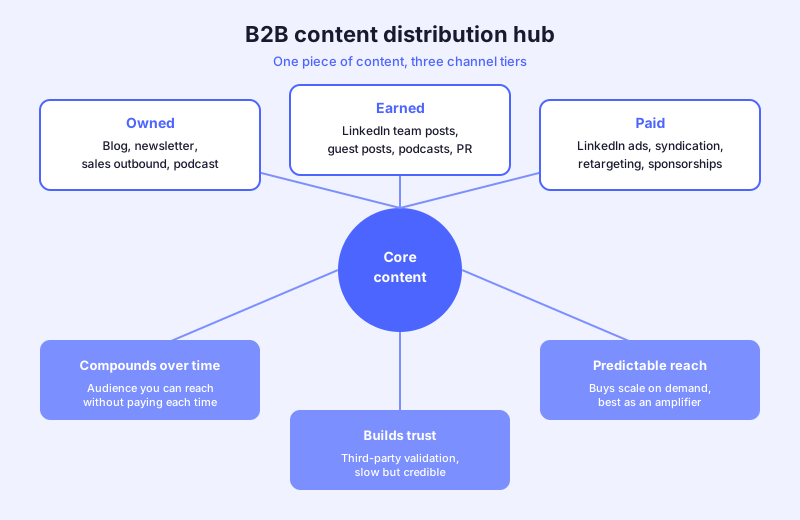
Owned channels
These are the ones you control: your blog, your newsletter, your podcast, your sales team's outbound. Owned channels are slower to build but they compound, and the audience you build can't be taken away by an algorithm change.
- Company blog: Still the backbone of B2B content. SEO traffic is patient money. A single ranking post can deliver leads for years.
- Email newsletter: The most underrated B2B channel. Open rates in B2B routinely beat social engagement by 10x or more. A 2,000-subscriber newsletter of the right people is often worth more than a 50,000-follower social account.
- Sales outbound and nurture sequences: Your sales team is a distribution channel. Every article, case study, and report should be packaged with a one-sentence pitch reps can drop into an email.
- Podcast or video show: Builds repeat attention and gives you reusable short-form clips.
Earned channels
Distribution you don't control but can influence. Earned is slow and unpredictable, but it carries more trust because it's a third party choosing to share you.
- Organic LinkedIn (team accounts): Employees posting on LinkedIn consistently outperform brand pages. Helping your team become visible on LinkedIn is one of the highest-leverage moves in B2B right now.
- Communities and Slack groups: Relevant industry Slack channels, Discord servers, and subreddits can drive qualified traffic if you show up as a helpful participant first, not a link-dropper.
- Guest posts and contributed articles: Writing for publications your audience already reads. Still works, still slow.
- Podcast guesting: High-trust, concentrated audiences. One good podcast appearance can outperform months of organic social.
- PR and press mentions: Hit-or-miss but occasionally transformative for brand awareness.
Paid channels
When you need reach on a specific timeline, paid is the lever. It's the most expensive per impression but the most predictable.
- LinkedIn ads: The clear winner for most B2B audiences. Expensive CPMs, but targeting that actually matches B2B buying reality.
- Content syndication: Services like TechTarget, NetLine, and Demand Science will place your gated content in front of ICP-matching audiences for a per-lead fee. Useful for middle-funnel plays but be picky about quality.
- Newsletter sponsorships: Sponsoring a trusted industry newsletter often beats social advertising on intent and trust. Great for awareness.
- Retargeting: Cheap, effective, and underused. Anyone who reads a post should see a follow-up offer in their feed the following week.
- Paid search: For bottom-funnel content and comparison keywords, not for top-of-funnel education.
For a deeper look at how these channels fit into a broader program, our B2B content marketing strategy guide covers the production side that has to happen before distribution is worth doing.
How to pick a distribution channel
Nobody has budget to do all of these well. Picking is the job. Three questions drive the decision:
- Where does my audience actually spend time? This sounds obvious and is constantly ignored. If your buyers are CFOs at mid-market manufacturers, they're probably on LinkedIn and reading two or three industry trade publications. They are not on TikTok and they are not in the r/marketing subreddit.
- What stage of the funnel am I distributing? Top-of-funnel awareness content (thought leadership, research reports) needs broad reach and lives well on LinkedIn, newsletters, and PR. Middle-funnel comparison content (buyer guides, frameworks) works in search, syndication, and nurture. Bottom-funnel content (case studies, ROI calculators) belongs in sales enablement and retargeting.
- What can I execute consistently? A newsletter you can't ship weekly is worse than one you never start. A LinkedIn strategy nobody on your team actually likes doing will die in three months. Pick channels your team can commit to.
Start with two owned channels and one earned channel. Get those running for a quarter before adding paid. If you try to light up six channels at once, you'll do all of them poorly.
Building a repeatable distribution system
The difference between teams that get distribution right and teams that don't isn't talent, it's process. Every piece of content should have a distribution plan attached to it before it gets written.
A simple version:
- Pre-publish (the week before): Line up two LinkedIn posts from employees, one newsletter segment, and a sales enablement one-pager. If it's a big piece, pitch it to one or two podcasts.
- Launch day: Company LinkedIn post, newsletter goes out, team members share, sales reps get the Slack alert with the pitch snippet.
- Week 2-4: Repurpose into carousels, clips, quote cards. Start retargeting paid ads to anyone who read the original.
- Month 2+: Syndicate to partner newsletters. Pitch guest post versions of the core idea. Update the post for SEO and resubmit.
This is where most teams break down. Not because the steps are hard, but because nobody owns the process. Make one person accountable for distribution on every piece, even if it's the same person who wrote it. If distribution is everyone's job, it's nobody's job.
One part of the system that people skip: picking the right thing to distribute in the first place. If the underlying piece isn't targeting a topic your audience genuinely cares about, no amount of distribution will save it. This is where upstream keyword and cluster planning matters. Tools like ClusterMagic help teams map topics into clusters and spot which pieces are worth the full distribution push versus which ones are quick-hit SEO fills. The worst outcome is running an all-channel blitz on content nobody needed.
For more on the end-to-end approach, our content distribution strategy guide goes deeper into the workflow and tooling.
LinkedIn: the default starting point for B2B
If you're only going to invest heavily in one channel, make it LinkedIn. It's where buyers, analysts, partners, and press all cluster. It's the one social platform where B2B engagement is actually going up, not down.
A few rules that hold up:
- Team pages beat brand pages: algorithmically and socially, posts from real humans outperform logo posts. Your company page should exist, but the energy goes into helping your team post.
- Write for the feed, not for the blog: a good LinkedIn post is not a link to your article. It's a standalone 150-300 word insight with the link in the comments or further down the post.
- Repost, don't just publish once: the same idea can run as a text post, a carousel, a video clip, and a newsletter issue. Repetition is the feature, not a bug.
- Comments are distribution: replying thoughtfully on other people's posts in your industry is one of the highest-ROI activities in B2B. Resources like the LinkedIn for Business hub have solid guidance on the mechanics.
Email: the most underrated channel in B2B
Most B2B companies run an email newsletter that is mostly company news and occasional content drops. That's a waste. The newsletter that works is one your audience would miss if it stopped showing up.
The format that consistently works in B2B: a short personal intro from a real person, one useful thing (a framework, a number, a pattern), and one link. Not ten links. Not a digest. One strong idea per send. If you can get that right, you can grow a list that opens everything, and that's worth more than any social channel.
Research from the Content Marketing Institute has shown for years that email is one of the top B2B channels by effectiveness, and it's still undervalued because it's less exciting than social.
Syndication and paid amplification: use with intent
Paid distribution is easy to waste money on. Two rules to avoid that:
First, only pay to amplify content that's already getting organic traction. If a piece is getting engagement on LinkedIn organically, that's the one to put paid budget behind. Paid is a multiplier, not a resurrection tool.
Second, know exactly what you're measuring. A content syndication vendor delivering 500 "leads" at $50 each is $25,000 that might produce zero pipeline if the leads don't match your ICP. Ask for firmographic controls, run small tests, and cut fast. Our content syndication SEO guide gets into the trade-offs in more depth.
The same principle applies to LinkedIn ads, newsletter sponsorships, and retargeting. Start small, measure pipeline influenced (not leads), scale what works, and kill what doesn't.
What this means for your team
If your content is getting produced but not distributed, fix that before you write another thing. Audit the last ten posts you published. For each one, write down exactly where it went after publish. If the answer for most of them is "the blog and one LinkedIn post," you have a distribution problem, not a content problem.
The teams winning in B2B right now are the ones treating distribution as a first-class job, not a checkbox. They have someone who owns it, a repeatable playbook, and a willingness to say no to publishing things they won't distribute. That's the move. Start with your owned channels, build one earned channel you can sustain, and only add paid when you have something organic actually working.
Recommended Posts





.svg)