

.svg)
B2B Content Experience for Demand Gen: Build Pipeline Through Content | ClusterMagic
B2B content experience is the sum of every content interaction a buyer has with your brand across their entire evaluation process. It is not one blog post or one whitepaper. It is the sequence, relevance, and accessibility of every piece of content a prospect encounters from first touch to closed deal.
This matters for demand generation because 94% of buying groups have already ranked their preferred vendors before contacting any of them. And 83% of B2B buyers complete 70% of their research before engaging a salesperson. If your content is not shaping preference during that research window, you are competing for a shortlist you were never on.
Why Content Experience Matters More Than Content Volume
Most B2B teams measure content output: posts published, ebooks produced, webinars hosted. But the average B2B deal involves 10+ stakeholders consuming 13 pieces of content during evaluation. The question is not whether you have 13 pieces. It is whether those 13 pieces create a coherent experience that builds preference systematically.
A good B2B content experience does three things. It answers the buyer's questions at each stage without making them search. It builds credibility through depth and specificity rather than marketing claims. And it creates a logical progression from problem awareness through solution evaluation to purchase confidence.
A poor content experience scatters content across your site with no clear path between pieces. A buyer reads a blog post, finds no obvious next step, and leaves. Or they find a case study but cannot locate the comparison content they need to evaluate alternatives. Fragmented content libraries lose buyers to competitors with better-organized information.
The structural layer that connects content into a coherent experience is your content cluster architecture. Clusters create navigable topic pathways. Without them, buyers are navigating a pile instead of a path.
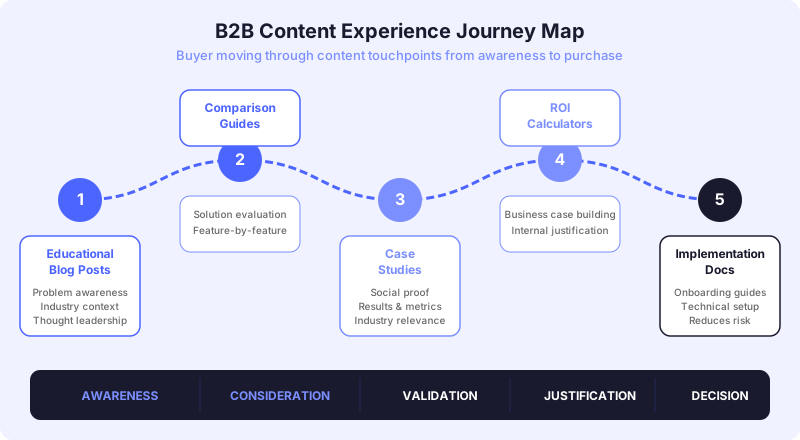
Mapping Content to the B2B Buyer Journey
Content experience starts with mapping what buyers need at each evaluation stage.
Awareness stage: Problem education. Buyers are researching the problem, not solutions. Content should help them understand the problem's scope, impact, and causes. Blog posts, industry research, and benchmark reports work here. Target the queries they type when they first recognize something needs to change.
Consideration stage: Solution frameworks. Buyers are comparing approaches and evaluating categories. They need comparison content, framework guides, and methodology explanations. Building a content strategy for this stage means creating content that positions your approach without being purely self-promotional.
Decision stage: Proof and validation. Buyers are building internal business cases. They need case studies with specific metrics, ROI calculators, implementation guides, and pricing context. This is where 75% of B2B buyers say personalized content significantly influences their decision, according to Demand Gen Report research.
Post-decision stage: Onboarding and expansion. Content experience does not end at the sale. Documentation, best practices guides, and customer education content drive adoption, reduce churn, and create expansion opportunities.
Building the Content Experience Infrastructure
Mapping content to stages is the strategy layer. Infrastructure is the execution layer that makes the experience work.
Content hubs over scattered pages. Group related content into topic-specific hubs where a buyer can find everything about a subject in one place. This is the practical expression of content clusters on your website. Each hub covers a topic comprehensively and links to related hubs for adjacent topics.
Progressive CTAs. Every piece of content should have a next step appropriate to its funnel stage. Awareness content links to consideration content. Consideration content links to decision content. Do not put a "book a demo" CTA on an awareness-stage blog post. Match the CTA to where the buyer actually is in their journey.
Content recommendations. Use on-page recommendations to surface related content based on the current page's topic and funnel stage. This keeps buyers moving through your content instead of bouncing back to Google to continue their research with a competitor.
Personalization by persona and stage. 96% of B2B marketers use AI for content creation, but personalization is where AI delivers the most demand gen value. Dynamic content blocks that adapt to visitor behavior, industry, or company size create more relevant experiences at scale.
Distribution for Demand Generation
Content that stays on your blog does not generate demand. Distribution puts content in front of buyers during their research phase.
Organic search. 83% of B2B marketing teams use content marketing as their primary demand generation tactic, with organic search reaching 67% adoption. Your content clusters must target the keywords buyers use during each evaluation stage.
Events and webinars. In-person events (52%) and webinars (51%) rank as the most effective B2B distribution channels. Use events to deliver high-value content experiences that compressed formats like social posts cannot replicate.
Email sequences mapped to buying stages. Segment your email list by persona and observed behavior. Deliver content that matches where each contact is in their evaluation. A contact who downloaded a comparison guide should receive case studies next, not another awareness-level blog post.
Social media with intent. Organic social reaches 42% effectiveness for B2B distribution. Post content that demonstrates expertise rather than content that promotes your product. Technical insights, industry analysis, and contrarian perspectives perform better than product announcements.
Measuring Content Experience Impact on Pipeline
The measurement challenge in B2B content experience is connecting content interactions to pipeline outcomes across long sales cycles.
Multi-touch attribution. Track every content interaction a contact has before entering your pipeline. Multi-touch attribution models increase attributed revenue by 23% compared to last-click models. This visibility shows which content pieces influence deals most.
Content-influenced pipeline. Measure the total pipeline value where contacts engaged with content before becoming opportunities. This metric captures content's role in creating and accelerating deals.
Content velocity by funnel stage. Track how quickly contacts move from one stage to the next based on the content they consume. Faster progression through stages indicates stronger content experience design.
For a complete framework on connecting content to revenue, see the content marketing ROI guide.
The Compound Effect of Content Experience
Individual pieces of content generate individual outcomes. A well-designed B2B content experience generates compound outcomes because each piece strengthens the next. A buyer who reads your problem education content, follows a link to your framework guide, and then discovers your case study has received a cohesive narrative that builds preference incrementally.
This compound effect is why content clusters and pillar pages matter so much for B2B demand generation. The cluster structure creates the content experience architecture. Internal links create the pathways. Funnel-stage mapping creates the progression.
ClusterMagic builds the content cluster architecture that turns scattered B2B content into a demand generation engine.
Book a strategy session to map your content experience to your buyer journey.
Written by Deanna S.
Recommended Posts





.svg)