

.svg)
B2B Content Marketing Plan Template: Build Your 2026 Content Engine | ClusterMagic

According to Content Marketing Institute's 2026 B2B research, only 29% of B2B marketers rate their content marketing as very effective. The biggest differentiator between the top performers and everyone else is not talent or budget. It is documentation. Teams with a written b2b content marketing plan consistently outperform those operating from informal agreements and ad hoc decisions.
A documented plan eliminates the two problems that derail most B2B content efforts: inconsistency (publishing in bursts followed by silence) and misalignment (producing content that marketing likes but sales cannot use). This tutorial walks through every section of a b2b content plan template you can adapt for your own team, with specific instructions for filling each one out.
Section 1: Business Goals and Content Objectives
Every content plan starts by answering one question: what is this content supposed to accomplish for the business? Skip this step and every decision that follows lacks a filter.
Business goals are outcomes the company cares about: revenue growth, market expansion, customer retention, reduced acquisition costs. Content objectives translate those goals into measurable content targets.
Example mapping:
- Business goal: Increase marketing-sourced pipeline by 40% in H2 2026
- Content objective: Generate 150 MQLs per month from organic content by Q4
- Content objective: Rank in the top 5 for 25 high-intent commercial keywords by Q3
Write down 2-3 business goals and 3-5 content objectives that connect to them. If a content objective does not trace back to a business goal, it does not belong in the plan. This alignment is what separates a b2b content strategy plan from a topic wishlist.
Setting Realistic Timelines
B2B content does not produce instant results. Organic traffic growth from SEO-driven content typically takes 3-6 months to compound. Set quarterly milestones rather than monthly targets for new content programs. Existing programs with established domain authority can expect faster returns from new content.
Section 2: Audience Definition and Buyer Personas
You cannot write effective B2B content without knowing exactly who reads it, what role they play in buying decisions, and what questions keep them stuck.
A b2b content plan template needs profiles for each persona in the buying committee. For most B2B companies, that committee includes:
- The champion: The person who discovers your solution and advocates internally. They need content that helps them build the case to their leadership.
- The budget holder: Usually a VP or C-level who approves spend. They need ROI evidence and risk mitigation content.
- The technical evaluator: The person who assesses integration complexity, security, and implementation timelines. They need documentation and technical depth.
- The end user: The person who will use the product daily. They need proof that adoption will not disrupt their workflow.
For each persona, document: their job title(s), their top 3 challenges, the questions they ask during evaluation, their preferred content formats, and where they consume content. HubSpot's buyer persona guide provides a structured interview framework for building these profiles from real customer data rather than guesswork.
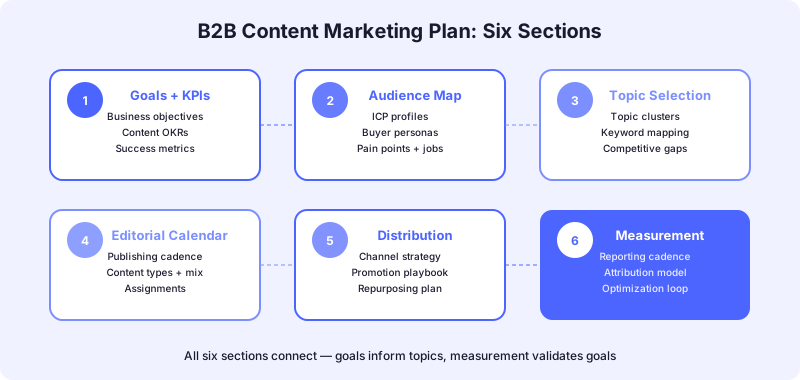
Section 3: Content Pillars and Topic Clusters
Random topic selection is the fastest way to waste a content budget. A structured topic architecture ensures every piece you produce reinforces your search authority and supports the buyer journey.
Content pillars are the 3-5 broad themes your brand should own in search. For a B2B marketing automation company, pillars might be: lead nurturing, email marketing, marketing analytics, and CRM integration.
Topic clusters are groups of related articles that surround each pillar. A pillar page provides comprehensive coverage of the broad topic. Cluster articles cover specific subtopics and link back to the pillar page. This structure builds topical authority that Google rewards with higher rankings across the entire cluster.
How to Choose Your Pillars
Start with your product's core use cases. Each use case typically maps to one content pillar. Then validate with keyword research: are people actually searching for topics within this pillar? If the search volume is too low, the pillar is too niche. If it is too broad, you will compete against established publishers with more authority.
A good pillar sits at the intersection of three factors: your product's relevance, adequate search volume, and manageable competition. Keyword mapping is the process that aligns these factors into a publishable plan.
Building the Cluster Map
For each pillar, identify 8-15 subtopics using keyword research and competitor content analysis. Group them by buyer journey stage:
- 4-6 awareness topics (educational, "what is," "how to")
- 3-5 consideration topics (comparisons, frameworks, templates)
- 2-3 decision topics (case studies, ROI analyses, implementation guides)
This distribution ensures your content serves every stage of the buying process, not just the top of the funnel.
Section 4: Editorial Calendar and Production Workflow
A content plan without a calendar is a plan that never gets executed. The editorial calendar translates your topic clusters into a publishing schedule with owners, deadlines, and status tracking.
Choosing Your Publishing Cadence
Sprout Social's B2B content research confirms that consistency matters more than volume. Publishing 2-4 high-quality posts per week outperforms publishing 10 thin posts. For teams with limited resources, even 4-6 posts per month can build meaningful organic traction if the topics are well-chosen and the content is thorough.
Set a cadence your team can sustain for 12 months. Burnout-driven gaps in publishing are worse for SEO than a slower but steady pace.
Calendar Fields to Include
Each entry in your editorial calendar should capture:
- Target keyword and search volume: The primary keyword this piece targets
- Funnel stage: Awareness, consideration, or decision
- Buyer persona: Which persona is the primary audience
- Content format: Blog post, guide, template, case study, video
- Author/owner: Who is responsible for the first draft
- Draft due date and publish date: Separated by at least 3-5 business days for editing
- CTA: What action should the reader take after consuming this content
- Status: Planned, in progress, in review, published
Build this in a tool your entire team can access. A shared spreadsheet works. Dedicated tools like Notion's content calendar templates or project management platforms add workflow automation if your team outgrows spreadsheets.
Production Workflow
A documented content creation workflow prevents the bottlenecks that slow publishing. Define who handles each step:
- Topic assignment and keyword brief
- Research and outline
- First draft
- Editorial review and SEO check
- Visual asset creation
- Final approval
- CMS upload and publish
- Distribution and promotion
Assign estimated hours to each step so you can forecast capacity. If your team can produce 12 posts per month and your plan calls for 16, you need to adjust the plan or add capacity before you fall behind.
Section 5: Content Distribution Strategy
Publishing is not distribution. A blog post sitting on your website with no amplification strategy will take months to gain organic traction. Smart distribution accelerates the timeline.
Owned Channels
Email newsletters remain the highest-converting B2B distribution channel after organic search. Segment your list by persona and funnel stage so each subscriber receives content matched to their interests. According to Leadfeeder's 2026 B2B marketing data, email marketing within content strategy returns $36 for every $1 spent.
LinkedIn dominates B2B social distribution. 84% of B2B marketers say LinkedIn delivers the best value of any social platform. Repurpose key insights from long-form content into LinkedIn posts, carousels, and short-form video clips.
Earned and Amplified Channels
Guest posts on relevant industry publications, podcast appearances, and co-marketing with complementary brands extend your content's reach beyond your existing audience. Prioritize channels where your target personas already spend time.
Content syndication can scale awareness but requires careful management to avoid duplicate content issues. The content syndication guide covers how to syndicate without harming your organic rankings.
Section 6: KPIs and Measurement Framework
A b2b content marketing plan without measurement criteria is a content calendar, not a strategy. Define your KPIs before you publish the first piece so you have a baseline to measure against.
KPIs by Funnel Stage
Awareness KPIs:
- Organic traffic (monthly sessions from search)
- Keyword rankings (positions for target terms)
- New vs. returning visitor ratio
Consideration KPIs:
- Content downloads and gated asset conversions
- Marketing-qualified leads from content
- Email subscriber growth rate
Decision KPIs:
- Demo requests or consultation bookings attributed to content
- Content-influenced pipeline value
- Cost per content-sourced lead vs. paid channels
Reporting Cadence
Report awareness KPIs monthly. Report lead generation and pipeline KPIs quarterly. Annual reporting should tie content investment directly to revenue outcomes. The SEO content analytics guide covers the specific GA4 configuration and CRM setup needed to track these metrics accurately.
Review the plan itself quarterly. Adjust topic priorities based on what is ranking, what is converting, and where competitors are gaining ground. A rigid plan that ignores performance data is nearly as bad as no plan at all.
Putting the Template Into Practice
A b2b content marketing plan is only useful if it gets used. Print it, share it with stakeholders, and review it in weekly content standups. The teams that treat their content plan as a living document, updated monthly with performance data and adjusted quarterly for shifting priorities, are the ones producing content that drives real pipeline.
Start with the section you are weakest on. If you have never documented buyer personas, start there. If you have personas but no editorial calendar, build that next. Perfect coverage across all six sections is not required on day one. What is required is forward progress on the sections that are currently causing the most friction in your content operation.
If you want help building a content plan that maps to your specific pipeline targets and competitive landscape, book a planning session and we will walk through the template together using your actual data.
Recommended Posts





.svg)