

.svg)
B2B Content Strategy for Lead Generation: From Traffic to Pipeline | ClusterMagic
Most B2B content teams can show traffic charts that go up and to the right. Far fewer can show how that traffic connects to qualified leads entering the sales pipeline. According to Content Marketing Institute's 2026 B2B research, 74% of B2B marketers consider content effective for generating prospects, but only 36% can tie content to revenue outcomes.
That gap between traffic and pipeline is where a b2b content strategy designed for lead generation becomes critical. Not all content needs to generate leads directly. But if your content program produces zero attributable pipeline after six months, you have a traffic strategy, not a lead generation strategy. This guide covers how to build the system that turns organic readers into qualified opportunities.
Why Most B2B Content Fails at Lead Generation
The most common failure mode is producing content for the wrong stage of the buyer journey. Awareness-stage blog posts attract visitors, but they do not convert them. Conversion-stage content (demos, free trials) captures demand, but only from buyers who already know you exist. The middle of the funnel is where most B2B content programs have their biggest gap.
Middle-funnel content educates prospects who are aware of their problem and actively evaluating solutions. These buyers are past the "what is X" phase and into the "how do I solve X" phase. They need comparison guides, frameworks, templates, and case studies that help them build an internal business case.
First Page Sage's B2B conversion data shows that organic search converts at roughly 2.6% for B2B companies. That number doubles or triples when the visitor lands on content matched to their specific buying stage. The takeaway: conversion rate optimization for B2B content is less about button colors and more about stage alignment.
Mapping Content to the B2B Buyer Journey
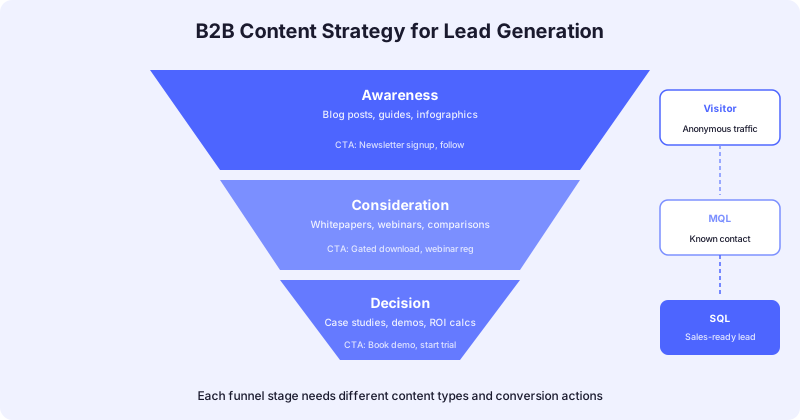
A b2b content plan needs to cover all three stages of the buyer journey, with deliberate handoffs between them. Each stage has a different job, different content formats, and different success metrics.
Awareness Stage: Build the Audience
Awareness content answers the questions buyers type before they know your product exists. These are "what is," "why does," and "how to" searches. Blog posts, explainer guides, and data-driven research reports live here.
The goal is not conversion. The goal is earning a first visit, a bookmark, or a newsletter signup. Measure this stage by organic traffic growth, keyword rankings, and new visitor volume. If your blog content strategy is not producing steady awareness-stage traffic, your middle-funnel content will have no audience to convert.
Consideration Stage: Earn Trust and Capture Intent
This is the stage most B2B teams underinvest in. Consideration content helps buyers compare options, understand implementation, and build confidence. The formats that perform best here are:
- Comparison guides that honestly assess your solution against alternatives
- Framework documents that give buyers a decision-making structure
- Templates and tools that deliver immediate value before any purchase
- Case studies with specific outcomes, timelines, and customer details
Gated content works at this stage when the asset is genuinely valuable. A 2-page PDF behind a form is friction. A 20-page implementation guide with original data justifies an email address. The key metric here is marketing-qualified leads (MQLs) generated by content.
Decision Stage: Remove Friction from Conversion
Decision-stage content exists to reduce the perceived risk of buying. ROI calculators, security documentation, integration guides, and customer success stories all serve this purpose. Most of this content lives on your website rather than in search results, but it should be discoverable by internal links from your higher-funnel pieces.
The goal here is demo requests, consultation bookings, or free trial starts. If your content clusters are structured correctly, a reader who enters on an awareness blog post should have a clear internal link path toward decision-stage content within two clicks.
Building a B2B Content Plan for Lead Generation
A b2b content marketing plan focused on leads requires more structure than a standard editorial calendar. You need topic selection criteria, funnel stage assignments, CTA mapping, and lead scoring integration.
Step 1: Audit Your Existing Content by Funnel Stage
Before creating anything new, categorize every existing piece by funnel stage. Most teams discover they have 80% awareness content, 15% consideration content, and almost nothing at the decision stage. That imbalance explains why traffic grows but leads do not.
Tag each post with its primary funnel stage and its current conversion action (if any). Posts with no CTA represent immediate opportunities. Adding a relevant content upgrade or consultation link to a high-traffic awareness post can generate leads within days without writing anything new.
Step 2: Identify High-Intent Keywords You Are Missing
The keywords that generate leads look different from the keywords that generate traffic. Awareness keywords tend to be informational ("what is account-based marketing"). Lead-generating keywords tend to be comparative or solution-oriented ("best ABM platforms for mid-market" or "ABM implementation checklist").
Use a content gap analysis to find the consideration and decision-stage keywords your competitors rank for that you do not. These gaps represent the highest-leverage content you can create for pipeline impact.
Step 3: Design CTAs for Each Funnel Stage
A single CTA does not fit every piece of content. A reader in the awareness stage is not ready for a sales call. A reader in the decision stage does not need another blog post.
Stage-appropriate CTAs:
- Awareness: Newsletter signup, related reading, free tool
- Consideration: Template download, webinar registration, assessment quiz
- Decision: Book a strategy call, request a demo, start a free trial
Inline CTAs outperform sidebar and footer CTAs by a significant margin in B2B. Place them within the body copy at natural transition points, not just at the end of the post. A reader who scrolls 60% of the way through a 2,000-word guide may never see a bottom-of-page CTA.
Step 4: Build Lead Scoring into Your Content Tracking
Not every content interaction signals the same level of buying intent. A prospect who reads a comparison guide and downloads a pricing template is further along than someone who read a single blog post.
Assign lead score values based on content type and funnel stage. Awareness content might add 5 points. A consideration-stage template download adds 15. Visiting the pricing page adds 25. When a contact crosses your MQL threshold, route them to sales with the content consumption history attached.
This scoring model requires proper SEO content analytics infrastructure, including UTM parameters, event tracking in GA4, and CRM integration. Without it, you are generating leads but cannot prioritize them.
Content Formats That Generate the Most B2B Leads
According to HubSpot's 2026 marketing data, the content formats with the highest lead generation rates in B2B are not the ones that get the most traffic. Here is what actually converts.
Interactive Assessments and Calculators
Interactive content converts at rates 2-3x higher than static content because it delivers personalized value. An ROI calculator that shows a prospect their potential savings is more compelling than a generic blog post about ROI. Build these for your highest-value use cases and gate the detailed results behind an email capture.
Original Research Reports
Proprietary data is the strongest B2B lead magnet. Surveys, benchmark reports, and industry analyses give buyers information they cannot get anywhere else. They also generate backlinks naturally, which boosts organic visibility for all your other content. The production cost is higher, but the per-lead cost tends to be lower because a single report can generate leads for 12+ months.
Template Libraries and Toolkits
Templates work because they compress hours of work into a ready-to-use format. A "B2B Content Strategy Template" or "Lead Scoring Worksheet" that solves a specific problem earns downloads from prospects who are actively working on that problem. That behavioral signal is strong buying intent.
Case Studies with Specific Numbers
Generic case studies do not generate leads. Specific ones do. "Company X increased pipeline by 340% in 6 months using this approach" gets shared, bookmarked, and referenced in internal buying discussions. Include the before/after metrics, the timeline, and the specific tactics used.
Measuring Content-Driven Lead Generation
The metrics that matter for a lead-focused b2b content strategy are different from standard content marketing metrics. Traffic is a leading indicator, not an outcome.
Primary Metrics
- Content-sourced MQLs: Leads whose first touchpoint was a piece of content
- Content-influenced pipeline: Total deal value where a prospect engaged with content before entering the pipeline
- Content conversion rate by funnel stage: The percentage of visitors who take the intended action at each stage
Secondary Metrics
- Lead-to-opportunity rate from content: What percentage of content-generated leads become sales opportunities
- Time from first content touch to MQL: How long your content nurture takes on average
- Cost per content-sourced lead vs. paid lead: The comparison that justifies continued content investment
Track these monthly and report them quarterly. A 90-day reporting cycle matches the timeline for B2B content to produce measurable results. Measuring content marketing ROI in shorter windows will undercount organic content's contribution and bias your team toward paid channels.
Common Mistakes That Kill B2B Content Lead Generation
Gating everything. Putting every piece behind a form creates friction and reduces organic reach. Gate your highest-value assets (templates, research, tools) and leave educational content ungated. The ungated content builds the audience; the gated content captures intent.
Ignoring content decay. A guide published 18 months ago that once ranked #3 for a high-intent keyword may have slipped to page 2. Refreshing that content is faster and cheaper than creating new content, and it preserves the link equity and ranking history. Build content refresh cycles into your content production workflow.
No sales enablement layer. Content should not just generate leads. It should help close them. Share your best consideration and decision-stage content with the sales team, with guidance on when to send each piece during the deal cycle. The same case study that generates an inbound lead can also accelerate an outbound deal.
Treating content as a marketing silo. The best B2B content programs pull insights from sales calls, customer success conversations, and product usage data. If your content team operates independently from revenue teams, the content will miss the specific objections, questions, and language that buyers actually use.
Building the System
A b2b content strategy for lead generation is not a one-time project. It is an ongoing system that connects keyword research, content production, CTA optimization, lead scoring, and sales handoffs into a continuous loop. Each component feeds the others.
Start by auditing your existing content for funnel gaps. Fill the middle of the funnel first, because that is where most teams have the biggest deficit and the fastest path to measurable leads. Layer in measurement infrastructure so you can prove what works, cut what does not, and earn the budget to scale.
If you want to see how a structured content program maps to your specific pipeline goals, book a strategy session and bring your current content metrics. We will show you exactly where the gaps are.
Recommended Posts





.svg)