

.svg)
Organic Searches Explained: How Search Results Actually Work in 2026 | ClusterMagic
Every time someone types a query into Google and clicks on a non-advertised result, that is an organic search. Organic searches are the unpaid listings that appear on a search engine results page (SERP) because a search engine's algorithm determined they are the most relevant, authoritative answer to the query. No money changed hands for that placement. The site earned it through content quality, relevance, and search engine optimization.
Understanding how organic search works is foundational to building a content strategy that drives long-term traffic. This guide breaks down what organic search results are, how they differ from paid results, where AI-powered features fit in, and why organic visibility remains the most valuable traffic source for most businesses.
What Are Organic Search Results?
Organic search results are the listings on a SERP that appear based entirely on relevance and authority signals, not advertising spend. When Google returns results for a query, it evaluates hundreds of factors to determine which pages deserve to rank. These factors include content relevance, backlink profile, page experience, and topical authority.
The organic results section typically begins below any paid ads and may include a mix of standard blue links, featured snippets, "People Also Ask" boxes, image packs, and video results. All of these are organic. The key distinction is simple: organic results are earned through SEO, not purchased through advertising.
Search Engine Land's organic vs paid comparison provides a detailed breakdown of how the two result types function differently from both a technical and business perspective.
For a deeper look at the mechanics behind how search engines decide what to show, our guide to how search engines work covers crawling, indexing, and ranking in detail.
Organic Search vs Paid Search: Key Differences
The search results page contains two fundamentally different types of listings. Understanding the distinction matters because each requires a different strategy, different investment model, and different timeline.
Paid search (PPC) results appear at the top of the SERP marked with a small "Ad" label. Advertisers bid on keywords through platforms like Google Ads, and they pay each time someone clicks. The moment the ad budget runs out, the listing disappears.
Organic search results appear below paid ads and are not marked with any advertising label. They are ranked by Google's algorithm based on relevance and authority. There is no per-click cost. Once a page ranks, it continues receiving traffic without ongoing payment.
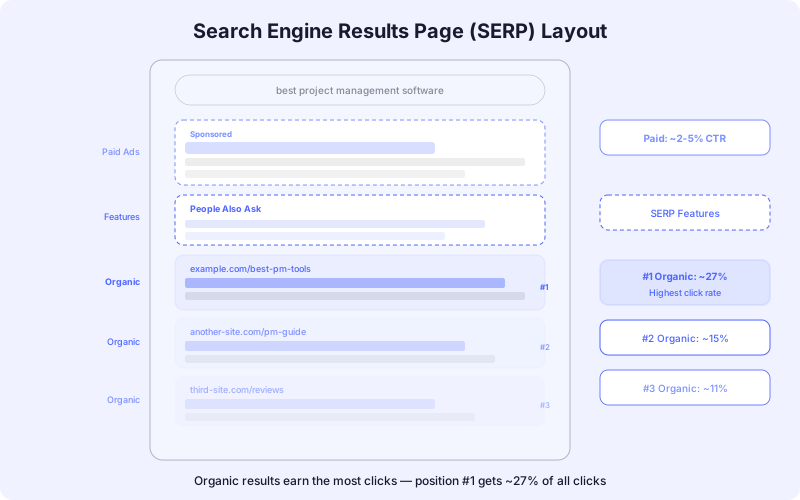
The numbers tell a clear story. According to Digital Silk's organic vs paid search statistics, organic results receive approximately 94% of all clicks on Google, while paid ads capture roughly 6%. Organic search accounts for over 53% of all website traffic across industries, compared to 15% from paid search.
Speed vs sustainability is the core tradeoff. Paid search can drive traffic within hours of launch. Organic search takes weeks or months to build but delivers compounding returns without incremental cost. Most businesses benefit from both, but organic search is the foundation for sustainable growth.
| Factor | Organic Search | Paid Search |
|---|---|---|
| Cost per click | None (after SEO investment) | Pay per click |
| Time to results | Weeks to months | Hours to days |
| Longevity | Months to years | Stops when budget stops |
| Click share | ~94% of total clicks | ~6% of total clicks |
| Trust signal | Higher perceived trust | Lower perceived trust |
How Google Determines Organic Rankings
Google uses a complex algorithm with hundreds of ranking signals, but the core factors fall into four categories that every business should understand.
Relevance measures how well your content matches the searcher's intent. Google analyzes your page content, title tags, headings, and overall topic coverage to determine whether your page genuinely answers the query. This is why keyword mapping matters: every page needs a clear primary keyword and supporting terms that signal relevance.
Authority measures how much trust the broader web places in your site. Backlinks from other reputable sites are the primary authority signal. A page with links from industry publications, educational institutions, or established media outlets ranks higher than an identical page with no external references. Our link building strategies guide covers how to build authority systematically.
Page experience includes Core Web Vitals (loading speed, interactivity, visual stability), mobile-friendliness, HTTPS security, and the absence of intrusive interstitials. Google's page experience documentation details each signal and how it influences ranking.
Topical authority is an increasingly important factor. Sites that demonstrate comprehensive coverage of a subject area through interconnected content clusters rank better than sites with isolated articles on scattered topics. Building topical authority requires a deliberate strategy of publishing depth, not just breadth.
SERP Features: The New Organic Landscape
The search results page in 2026 looks different from even two years ago. Google now displays multiple types of organic results beyond traditional blue links. Understanding these features matters because they affect where clicks go and how you should optimize.
Featured snippets appear at the top of organic results in a boxed format, pulling a direct answer from a ranking page. First Page Sage's CTR research found that featured snippets achieve a 42.9% click-through rate, higher than traditional position one. Structuring your content with clear headings, concise answer paragraphs, and organized lists increases your chances of winning this placement.
People Also Ask (PAA) boxes display related questions that expand to show brief answers pulled from ranking pages. Each question you appear in is an additional visibility touchpoint. Writing content that directly answers common related questions improves your chances of appearing here.
AI Overviews are Google's AI-generated answer panels that synthesize information from multiple sources. They have changed click distribution significantly, with Advanced Web Ranking's CTR analysis showing that position one lost roughly 32% of its clicks when AI Overviews appear. However, the sites cited within AI Overviews receive new visibility they would not have had otherwise.
Knowledge panels, image packs, and video results all represent organic visibility opportunities beyond the standard ten blue links. Each feature type requires different optimization approaches, but they all share one requirement: your content needs to be the most relevant, well-structured answer to the query.
Why Organic Search Visibility Matters for Businesses
Organic search is not just one marketing channel among many. For most businesses, it is the highest-volume, lowest-cost source of qualified traffic over time.
Organic traffic compounds. A blog post that ranks for a target keyword today continues driving traffic next month, next quarter, and next year. The initial investment in creating and optimizing the content pays returns indefinitely. Paid traffic requires ongoing spend to maintain the same volume.
Organic visitors are higher intent. Someone who searches for "best project management software for remote teams" and clicks an organic result has demonstrated specific intent. They are actively researching a purchase decision. This makes organic traffic more likely to convert than traffic from display ads or social media.
Organic search builds brand credibility. Appearing consistently in search results for industry-relevant queries signals authority to potential customers. Conductor's research on paid vs organic search found that users trust organic results significantly more than paid listings, which affects both click-through rates and downstream conversion.
For a broader perspective on why search engine visibility matters for business outcomes, see our guide on what SEO does for a company.
How to Improve Your Organic Search Performance
Improving organic search visibility is not a one-time project. It is an ongoing process of publishing relevant content, building authority, and optimizing technical performance. Here is where to focus.
Start with keyword research. Identify the queries your target audience is searching for and map them to specific pages on your site. Use tools like Google Search Console (free), Ahrefs, or Semrush to find keywords where you have impressions but low rankings. Those are your quickest wins.
Build content clusters, not isolated pages. A single blog post on a topic rarely builds enough authority to rank competitively. A cluster of interconnected articles covering a topic comprehensively signals to Google that your site is a genuine authority. Our content clusters and pillar pages guide explains how to architect these effectively.
Invest in content quality over volume. One comprehensive, well-researched article outperforms ten thin posts. Google's helpful content system explicitly prioritizes content that demonstrates expertise, experience, and genuine usefulness over content that exists primarily to rank.
Fix technical issues that block crawling and indexing. If Google cannot crawl your pages efficiently or if your pages load slowly, no amount of content quality will compensate. Run regular technical audits using Google Search Console and address crawl errors, slow pages, and mobile usability issues promptly.
Build internal links intentionally. Every new page you publish should link to related existing content, and existing content should be updated to link to new pages. This distributes authority across your site and helps search engines understand the relationships between your pages.
Monitor and iterate. Check Google Search Console weekly for ranking changes, new keyword opportunities, and technical issues. SEO is a feedback loop: publish, measure, optimize, repeat.
For teams that want a structured approach to building organic search visibility through content, book a ClusterMagic walkthrough to see how topic cluster architecture and systematic content production drive sustainable organic growth.
Recommended Posts




.svg)