

.svg)
What Is Organic Traffic? Definition, Importance, and Growth Tactics | ClusterMagic

Organic traffic refers to visitors who land on your website after clicking an unpaid result in a search engine. When someone types a query into Google, Bing, or another search engine and clicks on a result that is not an ad, that visit counts as organic traffic. It is the most sustainable, cost-effective traffic source available to any website.
As of 2024, approximately 53% of all website traffic comes from organic search. That makes organic traffic the single largest channel for most websites, ahead of paid search, social media, direct visits, and referral traffic combined. Understanding what organic traffic is and how it works is foundational to any digital marketing strategy because it determines how most people find your site.
How Organic Traffic Works
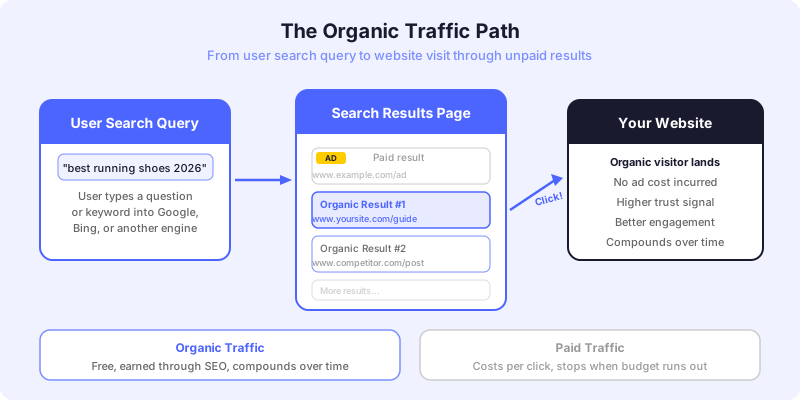
The path from search query to website visit has three stages.
Stage 1: The user searches. Someone types a query into a search engine. The query reflects an intent: they want to learn something, find something, or buy something.
Stage 2: The search engine returns results. Google's algorithm evaluates hundreds of ranking factors to determine which pages best match the query. It returns a ranked list of results, with organic (unpaid) results below any ads.
Stage 3: The user clicks an unpaid result. If the user clicks on a result that is not a paid advertisement, that click generates organic traffic for the destination website. The position of the result matters significantly. The top three positions capture over 60% of all clicks for most queries.
This three-stage process means organic traffic depends on two things: ranking in search results and earning the click. SEO (search engine optimization) is the practice of improving both.
Organic Traffic vs. Other Traffic Sources
Understanding organic traffic becomes clearer when you compare it to the other ways people find your website.
Organic traffic vs. paid traffic. Paid traffic comes from clicking on advertisements (Google Ads, social media ads). You pay for every click. When you stop paying, the traffic stops. Organic traffic costs nothing per click, but it requires investment in content and SEO to achieve and maintain rankings.
Organic traffic vs. social traffic. Social traffic comes from links shared on platforms like LinkedIn, Twitter, Facebook, and Instagram. Social traffic depends on active posting and engagement. Organic traffic compounds because content that ranks continues to attract visitors without ongoing effort to promote it.
Organic traffic vs. direct traffic. Direct traffic comes from users typing your URL directly into their browser or using a bookmark. Direct traffic reflects brand recognition. Organic traffic captures people who do not know your brand yet but are searching for topics you cover.
Organic traffic vs. referral traffic. Referral traffic comes from links on other websites. It depends on external sites linking to yours. While referral traffic is valuable, it is typically a smaller and less predictable channel than organic search.
The key advantage of organic traffic is sustainability. A page that ranks well for a keyword continues to attract visitors for months or years after publication. That compounding characteristic makes organic traffic the highest-ROI channel for long-term growth.
Why Organic Traffic Matters for Your Business
Organic traffic is not just about volume. It is about the quality and cost-effectiveness of that volume.
Trust and credibility. Users generally trust organic results more than ads. A high ranking signals to users that a site is a reputable and relevant source of information. That trust translates to higher engagement and conversion rates compared to paid traffic.
Cost efficiency. Every organic click is free at the point of delivery. The investment goes into creating content and building the technical and authority signals that earn rankings. Once those investments produce rankings, the marginal cost per additional visitor approaches zero.
Buyer intent alignment. Organic visitors actively searched for something related to your content. That search intent means organic visitors are more qualified than visitors from most other channels. Someone who searches "how to fix a leaky faucet" and lands on your plumbing website has a clear need that your business can address.
Compounding returns. Unlike paid advertising, where traffic stops when spending stops, organic traffic accumulates. A post published today might rank for years. The organic traffic growth guide covers how to build a content system that compounds these returns.
What Drives Organic Traffic
Several factors determine how much organic traffic your site receives.
Content quality and relevance. Google's primary job is matching search queries with the most relevant, useful content. Pages that comprehensively answer the searcher's question rank higher and earn more organic traffic.
Keyword targeting. Each page should target a specific keyword or set of related keywords that your audience searches for. Keyword mapping ensures every page targets a distinct query without competing against other pages on your own site.
Technical SEO. Fast load times, mobile responsiveness, clean site architecture, and proper indexing ensure Google can discover, crawl, and rank your content. Technical issues create ceilings that content quality alone cannot overcome.
Backlinks. Links from other websites to yours signal authority and trust. Pages in the first position on Google have an average of 220 backlinks. Earning links from relevant, authoritative sites strengthens your ranking potential.
Topical authority. Sites that comprehensively cover a topic area earn higher rankings across all related queries. Building content clusters around core topics signals to Google that your site is an authority on those subjects.
How to Start Growing Organic Traffic
If you are starting from zero or low organic traffic, here is the priority order.
Fix technical foundations first. Ensure your site is mobile-friendly, loads quickly, and has no major crawl errors. Use Google Search Console to identify and fix indexing issues.
Research keywords your audience uses. Identify the questions and topics your target audience searches for. Prioritize keywords with reasonable search volume and commercial relevance. Target a mix of broader terms and specific long-tail keywords.
Create content that answers those queries. Write comprehensive, well-structured content that directly addresses each target keyword. Include the keyword in the title, first 100 words, and at least one heading.
Build internal links between related content. Connect your pages through strategic internal linking that distributes authority and helps both users and search engines navigate your content.
Monitor and iterate. Track organic traffic in Google Search Console and your analytics platform. Identify which pages gain traction and create more content on related subtopics to build topical authority.
Organic Traffic in 2026
The organic traffic environment is shifting. AI Overviews now appear for approximately 10.4% of U.S. desktop keywords, and AI search platforms like ChatGPT and Perplexity are growing as referral sources. Organic traffic is not disappearing. The surfaces where it appears are expanding.
Sites that structure content clearly, cite specific data, and build genuine authority are positioned to capture organic traffic from both traditional search results and AI-powered interfaces. The fundamentals have not changed. The playing field has gotten wider.
ClusterMagic builds the content cluster architecture that turns organic traffic from a hope into a system.
Book a free strategy call to start building your organic traffic foundation.
Written by Deanna S.
Recommended Posts




.svg)