

.svg)
Content Repurposing Workflow: From One Asset to Ten Formats | ClusterMagic

Content repurposing is not about recycling old posts with a new headline. It is a production system that extracts maximum distribution value from every piece of content your team creates. Businesses that regularly refresh and repurpose content generate 76% more traffic than those relying only on new posts. And with 65% of marketers now using AI tools for repurposing, the teams without a repurposing workflow are falling behind on both efficiency and reach.
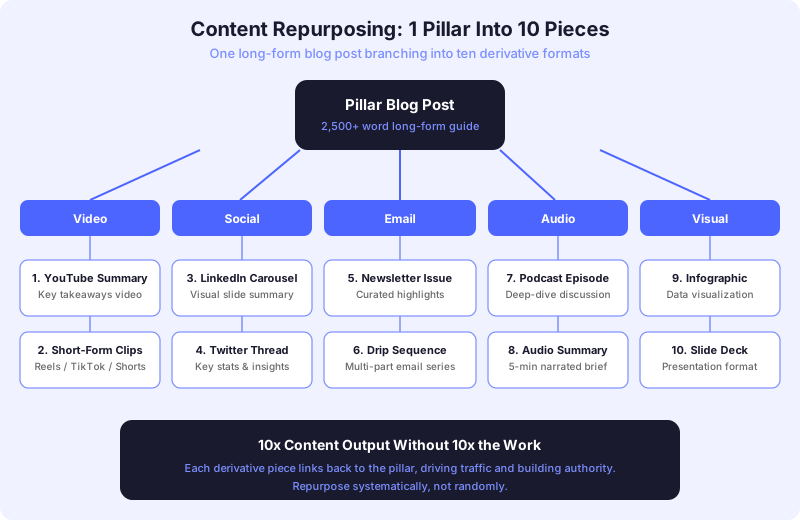
The core principle is straightforward: create one comprehensive pillar asset, then systematically break it into format-specific pieces for each distribution channel. The workflow below makes this repeatable.
The Pillar-to-Micro Framework
Every repurposing workflow starts with identifying your source asset. Not every piece of content is worth repurposing. The best candidates are long-form, data-rich, and structured with clear subsections.
Ideal source assets include: pillar blog posts over 2,000 words, webinar recordings, research reports, conference presentations, and in-depth tutorials. These contain enough substance to break into multiple standalone pieces.
Poor candidates include: short news updates, product announcements, and content that depends heavily on a specific moment in time. If the content cannot stand alone in pieces, it is not worth disassembling.
Before selecting source content, make sure your content creation workflow already produces pillar assets structured with clear headings and distinct subtopics. That structure is what makes repurposing efficient. For a strategy-level view of how to maximize the value of each piece you create, the content repurposing strategy guide covers how to systematically turn a single post into ten distinct assets across formats.
Step 1: Extract Key Components
Read through your source asset and identify the following components.
Standalone insights. Sentences or paragraphs that make a complete point on their own. These become social media posts, newsletter snippets, or quote graphics.
Data points and statistics. Every specific number, percentage, or benchmark can anchor a visual or social post. Pull these into a separate document.
Step-by-step processes. Any sequential workflow or methodology within the piece can become a short video tutorial, infographic, or carousel post.
Contrarian or surprising takes. Points where your content disagrees with conventional wisdom or presents an unexpected finding are high-engagement candidates for social and email content.
Pull quotes and key phrases. Bold statements that capture the article's core argument. These become headline copy for derivative pieces.
A single 2,500-word blog post typically yields 8-12 extractable components. Document them all before creating any derivative content. The extraction phase is separate from the creation phase.
Step 2: Map Components to Formats and Channels
Each extracted component maps to one or more output formats. Here is the standard mapping.
Blog post sections become short-form articles. A subsection covering one specific tactic can become its own 500-800 word post targeting a related long-tail keyword. This expands your content velocity and publishing cadence without requiring new research.
Data points become visual content. Charts, stat graphics, and comparison visuals perform well on LinkedIn, Twitter, and in email newsletters. Use tools like Canva or Figma to create branded data visuals.
Processes become video tutorials. Walk through the step-by-step methodology on camera or as a screen recording. Keep videos under five minutes for social distribution. Short-form video delivers the highest ROI of any B2B content format in 2026.
Key insights become email content. Each standalone insight can anchor a newsletter edition or nurture email. Link back to the full article for readers who want depth.
The full article becomes a podcast segment. Record yourself (or a team member) discussing the article's key findings. Add commentary, examples, and follow-up thoughts that are not in the written version. This makes the audio version genuinely additive, not just a reading of the blog post.
Step 3: Create a Production Schedule
Repurposing fails when it gets treated as an afterthought done whenever someone has free time. Build it into your production calendar.
Day 1: Publish the pillar asset. The source content goes live on your blog.
Days 2-3: Create visual and social derivatives. Produce stat graphics, quote cards, and carousel posts. Schedule them across the following two weeks.
Days 4-5: Record video and audio. Film short video tutorials and record the podcast segment. Edit and schedule for the following week.
Week 2: Distribute email content. Send the first newsletter featuring key insights with a link to the full post. Queue the remaining insights for subsequent sends.
Week 3-4: Publish derivative blog posts. Short-form articles targeting related keywords go live, each linking back to the pillar asset. This strengthens your content cluster through internal linking.
This schedule means one pillar asset generates active content distribution for a full month. That is the efficiency gain of systematic repurposing.
Step 4: Adapt, Do Not Duplicate
The most common repurposing mistake is copying and pasting content across formats. A LinkedIn post should not be an excerpt from a blog post. A video should not be someone reading the article out loud.
Each format has its own conventions. Social posts need hooks in the first line. Videos need visual engagement in the first three seconds. Email needs a clear value proposition in the subject line. Podcasts need conversational tone.
Adapt the core insight to fit each format's conventions. The underlying information is the same. The packaging is format-native. This distinction separates content repurposing from content copying.
Tools That Accelerate Repurposing
The right tools cut production time without sacrificing quality.
Descript handles video and audio editing with text-based editing workflows. Record once, then edit the transcript to edit the media. Export clips for social distribution.
Canva produces branded visual content from templates. Create a set of repurposing templates (stat graphic, quote card, carousel) and reuse them across every pillar asset.
AI assistants can rewrite blog sections into social-native copy, generate email subject lines, and draft podcast show notes. Use them for format adaptation, not for creating new ideas. Human oversight stays on the strategic layer.
Project management tools like Notion or Asana track repurposing tasks from extraction through distribution. Without a tracking system, derivative content falls through the cracks.
Connecting Repurposing to Your Content Strategy
Repurposing amplifies content that already exists. But it does not replace the strategic decisions about what content to create in the first place.
Your content distribution strategy should define which channels matter most for your audience. Repurposing fills those channels efficiently. Your content clusters define which topics to cover. Repurposing extends the reach of each cluster without requiring entirely new research and production for every channel.
When your pillar content is strategically planned, every repurposed piece reinforces the same topical authority signal. That compounds over time in ways that random social posting never can.
ClusterMagic builds the content cluster architecture that makes repurposing strategic instead of scattered.
Book a strategy session to plan your content clusters and repurposing workflow together.
Written by Deanna S.
Recommended Posts





.svg)