

.svg)
Ecommerce Content Marketing: The Complete Guide | ClusterMagic

What Ecommerce Content Marketing Actually Means
Most ecommerce brands treat content as a secondary channel, something to fill the blog when paid ads feel expensive. That framing costs them compounding organic value every month.
Ecommerce content marketing is the practice of creating and distributing useful content that attracts potential buyers through search, social, and referral, then moves them toward a purchase. The goal is not awareness for its own sake. It is building a body of content that earns traffic, establishes trust, and converts visitors who were never ready to buy from an ad.
The distinction matters because the strategy changes completely depending on which goal you are optimizing for. A brand chasing impressions publishes differently than a brand building topical authority and organic revenue.
This guide covers how to build a content marketing system that works for ecommerce specifically, not a generic framework adapted from B2B playbooks.
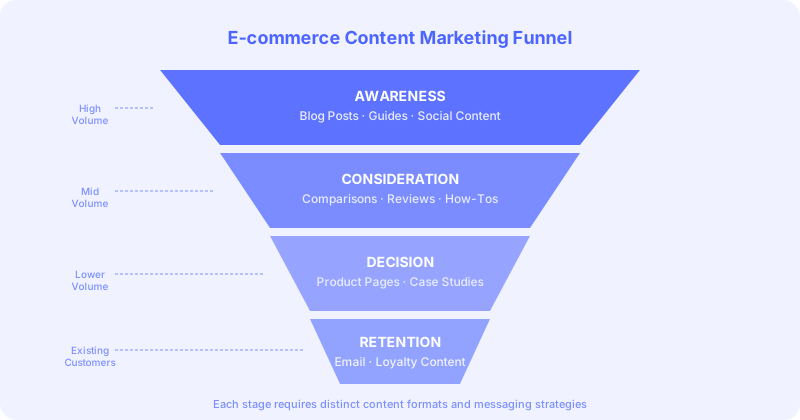
Why Content Marketing Works Differently for Ecommerce
Ecommerce buyers move through a different funnel than B2B buyers. Purchase cycles are often shorter, emotional triggers play a larger role, and the competition at the product level is intense. A buyer searching "best trail running shoes for wide feet" is much closer to purchasing than a buyer reading a blog post about running form.
Search intent is the organizing principle of any good ecommerce content strategy. Content needs to match where a buyer is in their journey, whether that is discovering a category, comparing options, or looking for reassurance before checkout.
According to data from SeoProfy, 57.3% of US internet users research brands via social platforms before buying, and that number jumps to 72.9% globally. This means organic content, not just product pages, is often the first real introduction a buyer has to your brand.
Ecommerce content also compounds in a way paid ads cannot. A well-optimized buying guide from two years ago can still drive qualified traffic today. That cumulative effect is what makes ecommerce seo organic traffic a long-term asset worth building.
The Four Content Types That Drive Ecommerce Results
Not all content serves the same function. Ecommerce brands that publish randomly, mixing product announcements with vague lifestyle posts, tend to generate traffic without revenue. The brands winning with content focus on four specific types.
Informational content answers questions buyers ask before they know what product to buy. Category explainers, comparison guides, and "what is" posts attract top-of-funnel traffic and introduce your brand as a credible resource.
Buying guides map products to buyer needs. These posts target high-intent queries like "best [product] for [use case]" and work especially well for higher-consideration purchases. A well-written buying guide from your store is often more trusted than a third-party review because you can include specifics about your own inventory.
Problem-solution content addresses the pain points your product solves. If you sell standing desks, content about lower back pain from sitting, ergonomic office setups, and productivity research speaks directly to buyer motivations before mentioning a product.
Social proof and comparison content removes purchase hesitation. This includes competitor comparisons, FAQ pages, and posts that address common objections. Buyers who are almost ready to purchase often search terms like "[brand] vs [brand]" or "[product] review." Owning those queries keeps them in your ecosystem.
Building a Topic Cluster Structure for Ecommerce SEO
Random publishing does not build topical authority. Search engines reward sites that demonstrate depth and coverage of a subject, which means your content needs to be organized, not scattered.
A content cluster approach organizes your content into a hub-and-spoke structure. A pillar page covers a broad topic comprehensively, and cluster pages go deep on specific subtopics that link back to the pillar. For an ecommerce brand selling outdoor gear, a pillar on hiking gear would link to clusters on hiking boots, trekking poles, hydration packs, and trail navigation.
This structure does two things. First, it signals topical authority to search engines by showing you cover a subject thoroughly. Second, it creates natural internal linking paths that distribute page authority and guide buyers deeper into your site.
The mistake most ecommerce brands make is treating the blog as separate from the product catalog. Your content and your product pages should work together. Buying guides should link to product pages. Product pages should link to relevant how-to content. This creates a connected content ecosystem rather than two siloed sections of your site.
ClusterMagic maps keyword clusters to this hub-and-spoke model automatically, showing which topics need pillar coverage and which subtopics are already addressed or missing entirely.
Keyword Research for Ecommerce Content
Ecommerce keyword research differs from general SEO keyword research in a few important ways. Volume alone is a poor guide. A keyword with 500 monthly searches but high purchase intent often outperforms a keyword with 10,000 searches but purely informational intent.
The framework that works for ecommerce content:
Category keywords are broad terms buyers use when exploring a product area. These anchor pillar pages and tend to have high competition. Examples: "trail running shoes," "standing desks," "cold brew coffee makers."
Comparison and review keywords signal buyers who are evaluating options. These are often mid-funnel and convert well: "best trail running shoes 2026," "standing desk vs sit-stand converter," "Baratza vs Fellow grinder."
Problem keywords attract buyers who know their pain but not yet their solution. These work well for informational and buying guide content: "why do my feet hurt when running," "how to reduce back pain at a desk job," "does cold brew have more caffeine."
Long-tail product keywords are specific queries with lower volume but high conversion probability: "women's wide trail running shoes for plantar fasciitis," "motorized standing desk under 500 dollars."
A strong blog content strategy for ecommerce covers all four layers, with content production weighted toward comparison and long-tail keywords because those drive buyers closest to purchase.
How to Build a Content Calendar That Scales
Most ecommerce teams fail at content marketing because they treat it as a sprint. Publishing intensively for two months and then going quiet does not build authority. Search engines and audiences both reward consistency.
The minimum viable content program for ecommerce is two to four pieces of optimized content per month. That pace is enough to build coverage over twelve months across priority topic clusters without overwhelming a small team.
A practical calendar structure for ecommerce:
Week 1: Publish a buying guide targeting a comparison keyword. Week 2: Publish an informational piece targeting a problem keyword. Week 3: Update or expand an existing piece based on ranking data. Week 4: Publish a product-focused piece or social proof content.
This rotation keeps the content mix balanced and ensures you are addressing all funnel stages, not just top-of-funnel informational posts that generate traffic without revenue.
As you scale, the process should become more systematic. That means using tools to identify content gaps, track which pieces are ranking and driving clicks, and prioritize updates for posts that need a push. Organic traffic growth at scale requires treating content as a managed program, not a creative exercise.
Content Formats That Work for Ecommerce in 2026
Written content remains the foundation of ecommerce SEO, but format choices within written content affect both rankings and conversion.
Long-form buying guides and comparison posts consistently outperform short posts for competitive ecommerce keywords. A 1,500-word guide that actually answers every question a buyer has performs better than a 400-word post that skims the surface. According to STRYDE's 2026 planning guide, brands using AI-powered workflows to produce consistent long-form content are seeing compounding gains faster than brands still publishing ad hoc.
For practical tips on improving ecommerce SEO at the page level, that guide covers the optimization steps that complement your content marketing program. Video and visual content supports written content but should not replace it for SEO purposes. Embedding a product demo video inside a buying guide can increase time on page and conversion rate without requiring you to rank a YouTube video separately.
Interactive tools such as product finders, quizzes, and configurators generate significant engagement and links when they solve a real buyer problem. A "find your perfect mattress" quiz earns backlinks and reduces bounce rate simultaneously.
Measuring Ecommerce Content Performance
The right metrics for ecommerce content marketing are different from brand content metrics. Impressions and page views matter less than rankings, clicks, and assisted conversions.
Organic search traffic to content pages is the primary leading indicator. The ecommerce SEO full guide covers the technical and content factors that drive that visibility. Growing organic traffic to your blog and buying guides means your content is earning search visibility.
Keyword rankings show whether your content is competing for the terms you care about. Tracking position movement for target keywords across your cluster tells you where to invest and where to update.
Assisted conversions measure how often a content page appeared in the path before a purchase. Most analytics platforms show this in the multi-channel funnel report. This is the metric that proves content ROI to skeptical stakeholders.
Average position and click-through rate together reveal optimization opportunities. High-ranking content with a low CTR needs better title tags and meta descriptions. Content with improving CTR but flat rankings needs on-page work.
Content that is not measured is content that does not get resourced. Build a reporting cadence, even a monthly spreadsheet review, before you scale production.
Common Ecommerce Content Marketing Mistakes
The patterns that consistently hold brands back are predictable once you know what to look for.
Publishing without keyword research is the most common. Teams write about what they find interesting or what the product team wants to promote, rather than what buyers are actually searching. The result is content with no search demand.
Ignoring content updates is equally damaging. A buying guide published two years ago with outdated product recommendations and stale statistics loses rankings over time. Updating high-value content regularly is often more efficient than producing net-new pieces.
Treating category pages and content separately leaves significant organic opportunity on the table. Your category pages are often the highest-authority pages on the site. Linking to and from content intelligently amplifies both.
Measuring too early causes teams to abandon content programs that would have worked. Most ecommerce content takes four to nine months to rank for competitive terms. Pulling the plug at month three based on low traffic data is a mistake.
Get Started with a Structured Content Approach
Ecommerce content marketing works when it is built as a system, not assembled post by post. That means defining your topic clusters before writing, mapping keywords to funnel stages, and tracking what is working so you can do more of it.
ClusterMagic builds that system for you by organizing keywords into clusters, identifying coverage gaps, and mapping a content plan that builds topical authority over time. If you want to see how it applies to your specific ecommerce category, book a walkthrough and we will walk through your site together.
Recommended Posts





.svg)