

.svg)
How to Get Organic Traffic to Your Website: 14 Content-First Strategies (2026) | ClusterMagic

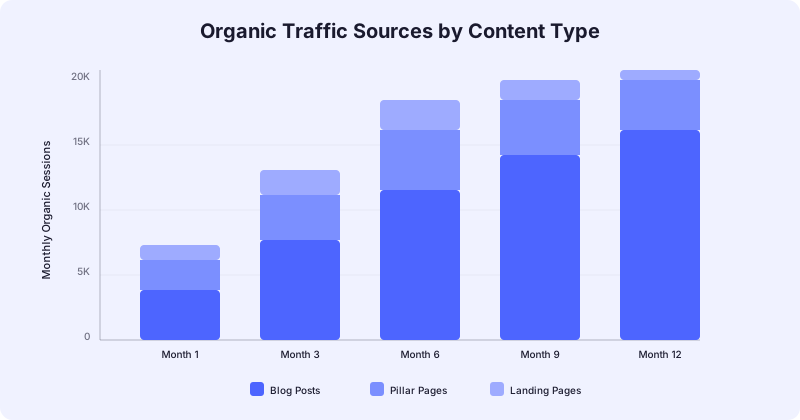
Figuring out how to get organic traffic to your website comes down to a straightforward principle: create the content that searchers want, structure it so search engines can find and understand it, and keep improving it based on performance data. Every tactic in this guide connects back to that principle.
The content-first approach to organic traffic works because it aligns with how Google evaluates quality. According to Google's helpful content documentation, the search engine rewards content created for people, not for algorithms. Sites that build genuine topical depth consistently outperform sites that chase shortcuts.
That said, "create good content" is not a strategy. These fourteen strategies are specific, actionable, and ordered by impact. Start with the first three, which lay the structural foundation, then layer on the remaining tactics as capacity allows. If you want help building this system for your site, schedule a strategy call and we will map the highest-impact moves for your specific situation.
Build the Foundation First
1. Map Your Topic Clusters Before Writing Anything
Random blog posts do not build organic traffic. Topic clusters do. A topic cluster is a pillar page covering a broad subject surrounded by supporting posts that cover specific subtopics, all interlinked to concentrate authority.
Before writing your next post, map out three to five pillar topics your site should own. For each pillar, list 8-15 supporting topics that address specific questions, comparisons, or use cases within that subject area. The content clusters and pillar pages guide walks through this architecture step by step.
This structure tells Google that your site has genuine depth on a topic, which is the primary signal for topical authority. Sites with cluster architecture rank individual posts faster because the supporting content reinforces each page's relevance.
2. Target Long-Tail Keywords With Clear Intent
The real opportunity for increasing website organic traffic lives in long-tail keywords. Ahrefs' keyword data shows that approximately 70% of all search traffic comes from long-tail queries, and 92% of keywords in their database see fewer than 10 searches per month. These queries have lower competition and clearer intent, which means higher conversion rates.
Instead of targeting "content marketing," target "content marketing strategy for B2B SaaS companies." Instead of "SEO tips," target "how to improve SEO for a new ecommerce site." Long-tail keywords tell you exactly what the searcher wants, which makes it far easier to create content that satisfies intent.
The long-tail keywords SEO guide covers how to find and prioritize these queries systematically.
3. Build a Content Calendar Around Cluster Sequencing
Publishing order matters. When you publish cluster posts in sequence, each new post links back to the pillar and to previously published supporting posts. This creates a compounding authority effect where the cluster gets stronger with every addition.
Plan your calendar in 90-day blocks. Dedicate each block to building out one or two clusters rather than scattering posts across unrelated topics. The SEO content calendar guide has a template for sequencing content around clusters.
Create Content That Ranks
4. Match Content Format to Search Intent
Google has already determined the winning format for most queries. Before writing, search your target keyword and study the top five results. If they are all listicles, do not write a narrative essay. If they are all detailed tutorials, do not write a 500-word overview.
Matching the SERP-confirmed format is non-negotiable for ranking. Content quality matters, but even the best-written piece will not rank if it delivers the wrong format for the query's intent. The SEO content strategy explainer covers how to analyze SERPs for intent signals.
5. Write Comprehensive Content That Covers the Full Topic
Thin content does not rank in 2026. According to Backlinko's SEO strategy research, comprehensive guides that answer every related question consistently dominate search results. This does not mean writing 5,000 words for every post. It means covering the topic thoroughly enough that the reader does not need to go elsewhere.
For each post, identify the questions searchers have about your topic and address each one. Use related keywords naturally throughout the content. Comprehensiveness is not about word count. It is about topic coverage.
6. Add Original Data, Examples, or Frameworks
Content that restates what every other article says will not differentiate your site. Add something original: proprietary data, a unique framework, real examples from your work, or a perspective that challenges the conventional approach.
Original contributions create two advantages. First, they give other sites a reason to link to your content, building backlinks naturally. Second, they satisfy Google's experience and expertise requirements under the E-E-A-T framework. Content with original insights earns both links and ranking trust.
7. Optimize On-Page Elements for Every Post
On-page SEO is table stakes, but many sites still miss basic elements. For every post:
- Include the primary keyword in the title tag, first 100 words, and at least one H2
- Write a meta description between 150-160 characters that includes the keyword and a clear value proposition
- Use descriptive alt text on all images
- Structure headings in logical H2 > H3 hierarchy
- Keep URLs short and keyword-relevant
These optimizations will not single-handedly rank your content, but missing them can prevent otherwise strong content from reaching its potential.
Content marketers who want to go beyond the basics and build a durable SEO skill set — covering keyword research, search intent analysis, and technical fundamentals — will find SEO for content marketers covers the skills that actually move rankings.
Grow Through Optimization
8. Refresh High-Potential Content Quarterly
Content refreshes are one of the highest-ROI activities for getting more organic traffic. According to Rank Math's organic traffic research, updating existing content can produce a 70% organic traffic boost for individual pages. Focus refresh efforts on posts ranking in positions 4-20 that need updated information, better structure, or stronger intent matching.
Quarterly refresh cycles keep your content current and competitive. Update statistics, add new sections for emerging subtopics, and improve internal linking as your content library grows.
9. Fix Technical SEO Issues That Block Indexation
Content that is not indexed cannot rank. Run a monthly technical check covering:
- Crawl errors in Google Search Console
- Page speed scores (target under 2.5 seconds for Largest Contentful Paint)
- Mobile usability issues
- Broken internal and external links
- Missing or duplicate meta tags
The search engine optimization guide covers the technical foundations that support organic traffic growth.
10. Build Internal Links Deliberately
Internal linking is how you distribute authority across your site and guide both readers and crawlers to your most important content. Every new post should include 2-4 internal links to related content, and every new post should be linked from 2-3 existing posts.
Do not treat internal linking as an afterthought. The internal linking SEO guide covers the specific strategies that amplify cluster authority and improve crawl efficiency.
Expand Your Organic Reach
11. Earn Backlinks Through Linkable Assets
Backlinks remain one of Google's strongest ranking signals. The most sustainable way to earn them is creating content that other sites want to reference: original research, comprehensive guides, unique frameworks, or tools.
Design one piece of linkable content per quarter. This might be an industry survey, a detailed benchmark report, or a free template. Promote it through outreach and let the asset generate links over time. The link building strategies guide covers both creation and promotion approaches.
12. Repurpose Top-Performing Content Across Formats
Your best blog post can become a LinkedIn article, a slide deck, a video script, or a podcast episode. Each format reaches a different audience segment and creates additional entry points back to your site. HubSpot's State of Marketing data shows that short-form video is the top ROI-driving format for marketers, making video repurposing particularly valuable.
Repurposing is not about duplicating content. It is about adapting the core insights for different consumption preferences and platforms.
13. Optimize for Featured Snippets and AI Overviews
Featured snippets and AI Overviews capture significant search real estate. To increase your chances of appearing in these positions:
- Structure content with clear definitions and step-by-step formats
- Use question-and-answer formatting for informational queries
- Include concise summary paragraphs at the beginning of key sections
- Use tables and lists for comparative data
As Search Engine Land's SEO priorities research notes, optimizing for AI visibility is an essential component of modern organic traffic strategy.
14. Track, Learn, and Double Down on What Works
Monitor organic performance at the cluster level, not just the page level. When a cluster starts gaining traction, accelerate it by publishing more supporting content, improving internal links, and refreshing the pillar page.
Monthly tracking should cover: organic sessions by cluster, average ranking position for target keywords, new keywords discovered in Search Console, and conversion rates from organic traffic. The content analytics guide provides a measurement framework for this tracking.
The Compounding Effect of Content-First Growth
Organic traffic from content compounds in a way that paid traffic never does. Every post that ranks continues generating traffic for months or years. Every internal link strengthens the cluster it belongs to. Every content refresh extends the lifespan of your existing assets.
The teams that see the best results are not the ones producing the most content. They are the ones producing the right content in the right order with the right structure. That is what a content-first approach to organic traffic looks like in practice.
If building this system feels like more than your team can handle right now, book a call and we will walk through what a managed approach looks like for your site.
Recommended Posts





.svg)